
A British TV channel that broadcast a talk saying it is acceptable to murder someone who has shown disrespect to Muhammad faces a heavy fine or potential closure by Ofcom.
Author: Ophelia Benson
-
Afghan women falling off the White House radar
Suzanne Nossel of Amnesty International USA said it was “really worrying” that Obama only made a passing reference to women on his trip to Afghanistan last week.
-
Witchcraft: Man kills mother, sets house on fire
A source told PUNCH Metro that 36-year-old Jonathan had been frustrated with his life and had accused his mother of being responsible for his inability to make progress.
-
Chuckle chuckle chuckle
Right. Romney looks back on his high school “pranks”:
http://www.youtube.com/watch?v=urjn5CjVbak
He chuckles a good deal, in a “we all know this is no big deal” way.
He does the classic notpology – “if anyone was offended or hurt by that” then he’s totes sorry but they’re obviously oversensitive.
Hey the guy was closeted! So obviously he Romney had no idea.
You know how boys are. [indulgent chuckle]
-
Not entirely out of the norm
What about Mitt Romney and his fun-loving ways at prep school? What about that time he rallied a bunch of fellow seniors to tackle a junior, hold him down, and cut his hair off?
John Lauber, a soft-spoken new student one year behind Romney, was perpetually teased for his nonconformity and presumed homosexuality. Now he was walking around the all-boys school with bleached-blond hair that draped over one eye, and Romney wasn’t having it.
“He can’t look like that. That’s wrong. Just look at him!” an incensed Romney told Matthew Friedemann, his close friend in the Stevens Hall dorm, according to Friedemann’s recollection. Mitt, the teenage son of Michigan Gov. George Romney, kept complaining about Lauber’s look, Friedemann recalled.
A few days later, Friedemann entered Stevens Hall off the school’s collegiate quad to find Romney marching out of his own room ahead of a prep school posse shouting about their plan to cut Lauber’s hair. Friedemann followed them to a nearby room where they came upon Lauber, tackled him and pinned him to the ground. As Lauber, his eyes filling with tears, screamed for help, Romney repeatedly clipped his hair with a pair of scissors.
It’s a plant! This Friedemann fella is a secret friend of Obama’s.
The incident was recalled similarly by five students, who gave their accounts independently of one another. Four of them — Friedemann, now a dentist; Phillip Maxwell, a lawyer; Thomas Buford, a retired prosecutor; and David Seed, a retired principal — spoke on the record. Another former student who witnessed the incident asked not to be identified.
Oh. Probably not a plant then.
I’ve seen a lot of “he was young” commentary. But he wasn’t all that young: he was a senior in high school. By that age you’re sort of expected to control impulses to tackle people and cut off their hair. You’re also sort of expected to know how to live and let live. You’re expected to grasp that whatever your likes and dislikes may be, you don’t get to enforce them on other people with physical force.
Notice, too, that Romney collected a gang of people to tackle this one kid – who was a target for being Not Manly Enough.
Romney sounds like a high school shit. Yes, some people are high school shits and then improve – but some are just shits.
“It happened very quickly, and to this day it troubles me,” said Buford, the school’s wrestling champion, who said he joined Romney in restraining Lauber. Buford subsequently apologized to Lauber, who was “terrified,” he said. “What a senseless, stupid, idiotic thing to do.”
“It was a hack job,” recalled Maxwell, a childhood friend of Romney who was in the dorm room when the incident occurred. “It was vicious.”
“He was just easy pickin’s,” said Friedemann, then the student prefect, or student authority leader of Stevens Hall, expressing remorse about his failure to stop it.
The incident transpired in a flash, and Friedemann said Romney then led his cheering schoolmates back to his bay-windowed room in Stevens Hall.
Friedemann, guilt ridden, made a point of not talking about it with his friend and waited to see what form of discipline would befall Romney at the famously strict institution. Nothing happened.
So the others are troubled by it but Romney isn’t. The others feel remorse and Romney apparently doesn’t. That too is interesting.
His campaign is portraying him as a likable, funny guy at prep school, and that apparently fits the record. But.
But Friedemann and several people closest to Romney in those formative years say there was a sharp edge to him. In an English class, Gary Hummel, who was a closeted gay student at the time, recalled that his efforts to speak out in class were punctuated with Romney shouting, “Atta girl!” In the culture of that time and place, that was not entirely out of the norm. Hummel recalled some teachers using similar language.
It’s not entirely out of the norm in the culture of this time and place, either. “Like a girl” – still a popular insult; just ask Tom Harris MP. But the norm is never universal, and it wasn’t universal even then. Some people are thoughtful enough to realize that the norm can be stupid or vicious or both.
-
The state will not be mocked
Strange but true.
An Iranian cartoonist has been sentenced to 25 lashes for a caricature of a local MP, the semi-official Ilna news agency has reported.
Ahmad Lotfi Ashtiani, MP for Arak, took offence to a cartoon published in Nameye Amir, a city newspaper in Arak.
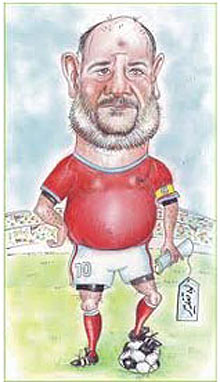
What can one say? When one is familiar with the principle that the people are allowed to criticize people such as employers and monarchs and MPs, what can one say about a cartoonist being sentenced to whipping for a mild cartoon like the above?
Shokraye was subsequently sued by the MP for having insulted him. A court in Markazi province, of which Arak is the capital, sentenced the cartoonist to 25 lashes – an unprecedented punishment for an Iranian cartoonist.
His sentence has triggered outcry among Iran’s online community with many calling on cartoonists to draw new caricatures of the MP. Many have expressed their anger on Twitter and Facebook.
Speaking to the Guardian, Nikahang Kowsar, a prominent Iranian cartoonist who fell foul of the Iranian regime after famously caricaturing a prominent cleric like a crocodile in a series of cartoons, said: “This verdict is a direct threat to each and every cartoonist working inside Iran. From now on, if this sentence is not set aside, any public official could sue the cartoonists for portraying him/her in a cartoon.”
You know what to do. If you have any cartooning talent, get out there and put it to good use.
-
A neglected form of sexism
We’ve had it wrong all this time – it’s not women who are kept down and held back and put in their place, it’s men. And it’s not just anonymous ranters on Reddit who say so, either.
In The Second Sexism, shortly to be published in the UK, David Benatar, head of the philosophy department at Cape Town University, argues that “more boys drop out of school, fewer men earn degrees, more men die younger, more are incarcerated” and that the issue is so under-researched it has become the prejudice that dare not speak its name.
“It’s a neglected form of sexism,” Benatar says in a telephone interview. “It’s true that in the developed world the majority of economic and political roles are occupied by males. But if you look at the bottom – for example, the prison population, the homeless population, or the number of people dropping out of school – that is overwhelmingly male. You tend to find more men at the very top but also at the very bottom.”
I suspect that’s his own particular definition of “the bottom.” I suspect there are a lot of women on the bottom too – for example, the wives and daughters of male prisoners and the homeless population and the droppers out of school. But in any case that casual admission plus brisk dismissal of the fact that most economic and political roles are occupied by males is pretty absurd.
Men are also increasingly the butt of jokes.
Riiight – that’s why Tom Harris says a protester who throws an egg and runs away is “like a girl.”
Give me a break.
-
Pertussis epidemic in Washington state
Washington State has the highest percentage of parents in the nation who voluntarily exempt their children from one or more vaccines.
-
No teaching pseudoscience please
A letter to the Observer notes that worries about creationism prompted the government to change the rules for free schools to prevent them from teaching pseudoscience.
However, not enough attention has been paid to two equally grave threats to science education, namely Maharishi and Steiner schools. Maharishi schools follow the educational methods of the Maharishi Mahesh Yogi, guru of the transcendental meditation movement, while Steiner education is based on an esoteric/occultist movement called anthroposophy, founded by Austrian mystic Rudolf Steiner (“Holistic unit will ‘tarnish’ Aberdeen University reputation“). The Maharishi school has as its specialist subject the “science of creative intelligence”, which is not based on science. It also teaches a system of herbal medicine, most of which lacks evidence of efficacy and safety. Anthroposophy is centred on beliefs in karma, reincarnation and advancing children’s connection to the spirit world.
The first Steiner academy opened in 2008, with a free school to open this September. The first Maharishi school opened last September. Both groups have interviews to open more schools in 2013. We believe that the new rules on teaching pseudoscience mean that no more of these schools should open.
Pavan Dhaliwal head of public affairs, British Humanist Association; Edzard Ernst professor of complementary medicine, Exeter University; David Colquhoun professor of pharmacology, University College London and blogger, dcscience.net; Simon Singh science writer; Andy Lewis Quackometer.net; Alan Henness zenosblog.com; Melanie Byng; Richard Byng medical academic; James Gray; Mark Hayes; David Simpson
Steiner schools are mostly under the radar, and shouldn’t be; they’re very sinister.
-
Not this again
On the one hand, yes, religion as mostly practiced and interpreted now is illiberal and intolerant and sucky, but on the other hand, it always could be fluffier and nicer, if people would only.
But they won’t, so what’s the point of saying that?
Oh, you know…it fills the time. It’s not as hazardous as snowboarding. It’s easy.
Christianity, Islam and the other world faiths shouldn’t be completely disregarded. Many of the ethics they teach – and the faith, and in turn, the security which they offer believers – are far too valuable to ignore; what needs to change is our understanding. It is up to the intellectual religious leaders, who have the ability to engage with the intelligent as well as the uneducated, to renovate religion.
No. The items that are too valuable to ignore? Here’s the thing: they’re not inherently religious. They don’t depend on religion. We don’t need to keep religion to keep the items. We don’t decide which items are valuable and which are sucky on the basis of religious criteria; we use other criteria, as Plato pointed out such a god damn long time ago. We can make our own good things. We can transmit them, we can teach them, we can defend them, we can enshrine them in bills and declarations of human rights. We don’t need god to help. We do it better without god.
-
Men are the real victims of sexism
Never mind all those men at the top; look at all those men on the bottom.
-
Iranian cartoonist sentenced to 25 lashes for drawing MP
His sentence has triggered outcry among Iran’s online community with many calling on cartoonists to draw new caricatures of the MP.
-
Another hanging
Four men in Iran are due to be hanged very soon – as in, any time now – as their sentence has been approved by a hight court.
According to HRANA and JOOPEA, these four men will be hanged for sodomy according Shari’a law.
…
London based Iranian Human Rights Lawyer, Mehri Jafari said: ‘I am horrified and saddened to have heard the news about these four men. Not only with regards to the execution which is about to take place, but the fact that is beyond our control.
‘There are two important issues in this case; the location of the alleged occurrence and the interpretation of the Sharia’ law that a Hodud (strict Sharia punishment) is [im]minent. Kohgiluyeh and Boyer-Ahmad is one of the most undeveloped provinces in Iran and it is obvious that a lack of access to lawyers and fair trial can be considered a serious issue in this case. After this announcement it is very likely that the execution will be carried out soon, and the remote location makes it difficult to exert any influence on the process.’
Mehri further pleaded: ‘I hope international organisations act quickly and effectively on this specific case.’
So, spread the word.
-
Four Iranian men due to be hanged for sodomy
“The judicial denial of same-sex relationships in Iran stems from its relationship to Shari’a law and patriarchy,” says Gorji Marzban of Austrian-based Oriental Queer Organization.
-
Particularly hard to take in a woman
Richard Carrier has a great extended interview with Susan Haack.
One sample:
But I’m also sure that many of the “difficulties and annoyances” of my life in philosophy have arisen, not simply because I’m a woman, but because of other characteristics of mine—though I suspect people find some of these particularly hard to take in a woman. For one thing, I’m very independent: rather than follow philosophical fads and fashions, I pursue questions I believe are important, and tackle them in the ways that seem most likely to yield results; I am beholden to no clique or citation cartel; I put no stock in the ranking of philosophy graduate programs over which my colleagues obsess; I accept no research or travel funds from my university; I avoid publishing in journals that insist on taking all the rights to my work; etc., etc.
Read the whole thing.
-
Whoops
A student in the Department of Human Ecology at the University of Alberta had a good idea for her research project on workplace hazards: high heels. She’s required to wear them herself for her job as a server, and she’s fallen a few times while carrying trays.
It’s brilliant, isn’t it? The job of a server is to carry heavy plates or trays, so naturally the thing to do is handicap them by requiring them to wear shoes that are harder to walk in than shoes without high heels. Naturally. Ginger Rogers did everything Fred Astaire did, but she did it in high heels and backward.
She talked to 35 servers; all had slipped or fallen on the job; 40% said they’d been injured as a result. 91% said they were required to wear high heels for work.
H/t Christopher Moyer.

-
Philip Kitcher on “scientism”
Since the conclusions reached in analyses of human behavior will be socially consequential, the evidence for them deserves to be closely scrutinized.
-
The in-laws
And then, speaking of where you’d prefer to live, there’s life with Ismail Belghar of somewhere in New South Wales.
Belghar, who has been married to his wife for 11 years, became aware she had been to the beach in late 2009 because her shoulders were slightly sunburned.
He rang his sister-in-law and said: “You slut, how dare you take my wife to the beach.”
Just before Christmas, 2009, Ms Kokden came face to face with Belghar while out shopping with her brother at the Broadway Shopping Centre.
Belghar slapped her across the face then carried her to the railing around the car park where he held her out over it.
She was freed when her brother tackled Belghar.
Family life, eh?
The court heard, because of his religious beliefs and because he thought he had absolute authority over her, Belghar felt it “abhorrent” that his wife, Hanife Kokden, had been to the beach where she “displayed her body”.
In March, Judge Ronald Solomon had granted Belghar a trial before a judge sitting alone after agreeing he may not receive a fair trial with a jury.
“The attitude of (Belghar) … is based on a religious or cultural basis. In light of the fact there has been adverse publicity regarding people who hold extreme Muslim faith beliefs in the community, I am of the view that the apprehension by (Belghar) that he may not receive a fair trial is a reasonable apprehension,” Judge Solomon said.
Nicely circular, innit. Belghar has disgusting religious beliefs, along with an opinion that he has absolute authority over his wife. He might not get a fair trial because a jury might dislike his disgusting religious and spousal beliefs. Therefore he can get a judge all to himself.
So the more disgusting your beliefs (and their resulting actions) are, the more special treatment you should get? Is that the logic?
An appeals court overruled the judge, so if that is the logic I guess the court didn’t accept it.

