
I’d better go back to the beginning, and explain very carefully, for the inattentive. (Not you, obviously.)
There is such a thing as skepticism about morality. There really is. There are people who ask why we should care about [the poor, immigrants, people who fall through the cracks, victims of natural disasters, all of the above in Bangladesh or Ethiopia or DR Congo, animals, climate change, future generations, other people’s children, schools, famines, droughts, factories that collapse, slave labor, forced marriage, stonings, for example]. There are people who ask why we shouldn’t just take as much as we can of everything for ourselves or for ourselves and our families or for ourselves and our tribe. There are people who say we shouldn’t care, and we should take as much as we can. Those are all claims, about morality, and people make them.
Apparently I didn’t make that clear enough (because I thought anyone who bothered to read this blog would already know it).
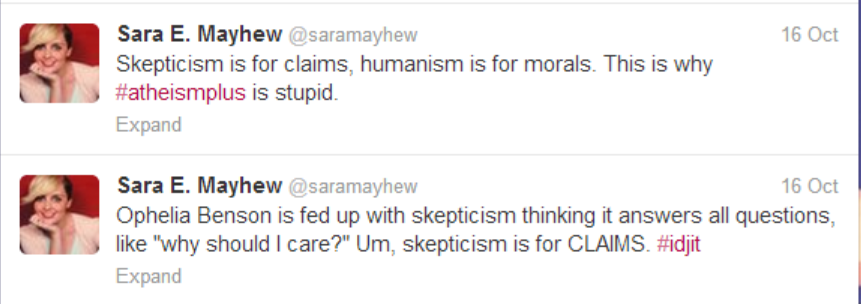
Sara E. Mayhew @saramayhew
Ophelia Benson is fed up with skepticism thinking it answers all questions, like “why should I care?” Um, skepticism is for CLAIMS. #idjit
Skepticism is for claims, humanism is for morals. This is why #atheismplus is stupid.
See? Obviously I didn’t explain carefully enough, because that’s completely uncomprehending. I didn’t say skepticism thinks it answers all questions. I said it asks questions like “why should I care?” and that it’s not skepticism that can answer them. That’s really…quite different.
There are skeptics who think the whole concept of “morals” is bullshit. More skepticism isn’t the way to convince them otherwise. Skepticism isn’t the boss of all claims, and morality doesn’t float free of all claims. It’s not that easy.