Katha Pollitt at The Nation says pleasingly harsh things about the Religious Freedom Restoration Act.
RFRA, which required laws infringing on religious convictions to meet the “strict scrutiny” test, was overkill. There were other ways to protect Native Americans’ right to use peyote in religious ceremonies. The church could have asked the State Legislature for an exemption; after all, during Prohibition, the Catholic Church was allowed to use wine in the Mass. Or—but now I’m really dreaming—workers could have been given legal protection from losing their jobs for minor lawbreaking outside the workplace. I mean, peyote! Come on. But no, for some reason, there had to be a sweeping, feel-good, come-to-Jesus moment uniting left and right.
“The power of God is such,” said President Clinton, “that even in the legislative process, miracles can happen.” Gag me with a spoon.
What were progressives thinking? Maybe in 1993, religion looked like a stronger progressive force than it turned out to be, or maybe freedom of religion looked like a politically neutral good thing.
I know what I was thinking: I was thinking it was a horrible law. I have never in my life thought that religion was any kind of progressive force. Freedom of religion as normally understood looked like a politically neutral good thing, but not the absurdly expansive version that RFRA imposed.
For some, RFRA doesn’t go far enough because it doesn’t apply to state law. In April, Mississippi became the nineteenth state to enact its own RFRA, which essentially legalizes discrimination against LGBT people by individuals as well as businesses, as long as the haters remember to attribute their views to God. Instead of protecting LGBT people from discrimination—a business refusing to serve them, for example—Mississippi will be siding with the bigots, just like old times. Last year, the state passed the Student Religious Liberties Act, which gives pupils the right to express themselves freely on matters of faith without consequences. Johnny can tell his classmate Jane that she’ll burn in hell because she’s a lesbian and write all his biology papers on Adam and Eve and their dinosaur pets, and the school can’t say a word about it. That would be intolerant.
Anybody who didn’t know all along that this would be the implication wasn’t paying enough attention. (It wasn’t long after that that I read Stephen Carter’s dreadful book about the horrors of secularism, and I thought that was a huge crock of shit too.)
Even if religion were not the basically conservative social force it is in American life, expanding the religious freedom of individuals or corporations is simply not a good way to make public policy.
Why? Because religion doesn’t have a reliable or intersubjective grasp on reality.
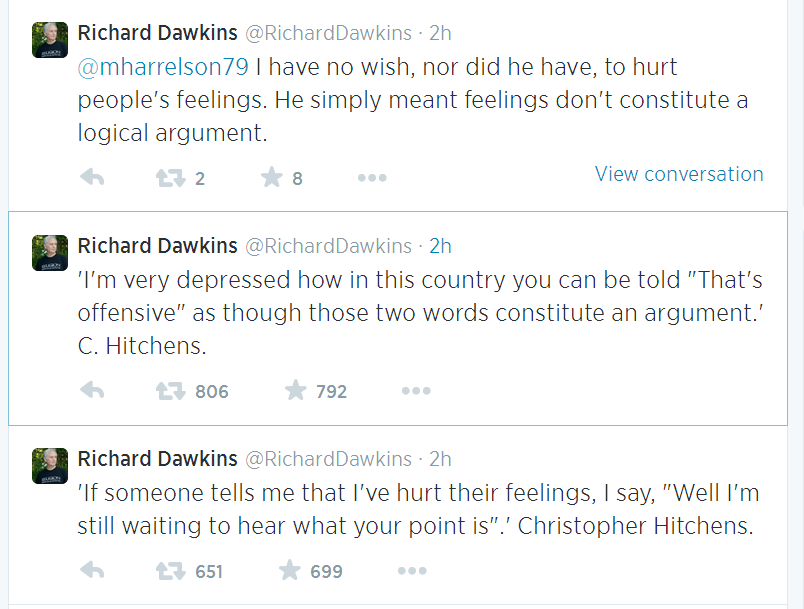
It’s great, though, when you don’t have an actual argument to support your position. The right uses religion because that’s all it’s got: the secular arguments against LGBT rights are in history’s dustbin…Religious freedom functions like a giant get-out-of-reality-free card: your belief cannot be judged, because it’s a belief.
My point exactly. It’s the realm of the arbitrary, and that’s no good for making public policy.
(This is a syndicated post. Read the original at FreeThoughtBlogs.)