
Originally a comment by Sastra on Let us be clear about the difference.
YNNB #7 wrote:
Too many of us are under the illusion that we’re a self-made species.
The deceptive comforts of modernity responsible for this would not be complete I think without what appears to have ratcheted the illusion up to 11: the disembodied avatar worlds of the internet. While the theories of postmodernism and post colonialism formed before the average person had at least one personal computer, the plausibility of a human nature detached from its evolved biological origins no doubt got a major boost from a large part of the population—especially the younger part of the population — getting comfortable with entire worlds where we could be a magical elf.
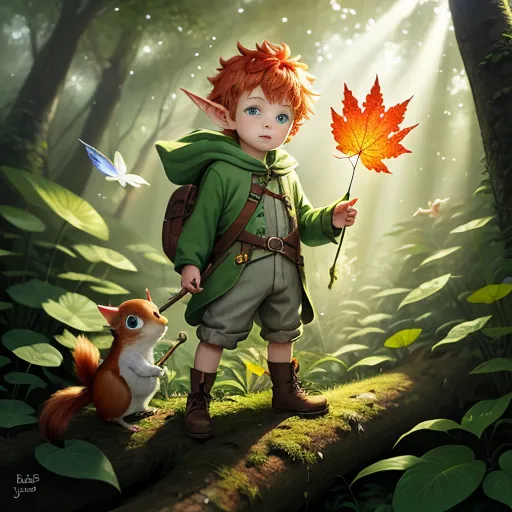
On our computers we have created species, we’ve re-created ourselves, and we’ve lived in intellectual spaces where the sex binary didn’t exist unless you asked Ziggybottom34 whether they were male or female.
I don’t know if this has affected Judith Butler and her academic acolytes, but I’ll bet it’s a reason fewer people are laughing at the more unbelievable parts.
Comments
9 responses to “Guest post: The disembodied avatar worlds of the internet”
That goes right along with the fact that a lot of people believe evolution has ended in humans because we can remake our own world. True to some extent…but we will still evolve. If it seems humans are not evolving, that could be the result of our slow rate of reproduction and the enormous size of our species, both of which work against rapid evolutionary change.
I suspect for some people it’s the only way they can continue to believe that humans are something apart, something more than the other animals. As a biologist, I dislike the idea that there is a ‘more’ and a ‘less’ in species. It’s just different, and fits us to different ways of being in the world. We’re not the only species that remakes our habitat, either. That’s actually rather common.
Also being out of touch from the natural world. Gardens are replaced with paved parking; we are insulated from the weather; hardly anyone in the western world would smell what a birth or death is like – I mean of an animal, not a human. You don’t get the smell, and the feel on the screen, though deaths and births are dramatic touches in films and on television. Nature programmes are spectacles. You’d be better off watching a cat catch a mouse so as to be reminded that we are one of the mammals, with instincts and fears.
Christopher Hitchens used “mammals” a lot in his polemic – I found it an annoying tic, but I can see what he was getting at.
You know, KB, when you put it like that…I hated the smell of death when I grew up on a farm, whether it was chickens, rabbits, or kittens. Of course, there were also the big animals…mostly sheep…and they smell not just in death, but in life.
Seeing a chicken without a head lying in front of you for you to remove the feathers…it’s hard not to know where food comes from at that point.
Same here. We’re not “more evolved” than any other species; we’re not better than, or more important than any other organism.
I’ll bet there aren’t many that remake their habitat so that it’s less hospitible to themselves.
I haven’t read it, but in The Eye of the Crocodile, philosopher Val Plumwood wrote of her profound experience of having been attacked by a saltwater crocodile, and nearly becoming food for another being:
https://www.jstor.org/stable/j.ctt24hcd2
Also, lest we forget, evolution is not necessarily progressive. It wasn’t for the Wooly Mammoth, or the Dodo, or T-Rex. It is a blind process (as Dawkins elaborated on) in which human beings could become extinct. The ironic thing is that how, in the unique way human beings have evolved, we have become capable of causing our own extinction, quite exclusive of ‘nature’ as we know it. This would happen according to the laws of physics, and the process of evolution would have it’s way, but it is a possible future outcome. Being isolated, or at least insulated from the natural world, and it’s wonders and horrors, doesn’t seem like a life well lived. Natural processes and inevitablities can be horrific, vulgar, disgusting, and bizarre, but also wonderous and sublime. It’s not always easy to see the right or wrong of it, or the good or bad, but in human culture, we do have a knack for being able to communicate quite a lot of what life is all about to each other, which is astonishing given the other extant species of which we can measure ourselves. If in two thousand years, and if human beings are extinct, and the descendents of cockroaches (or,whatever) evolve to wonder about such things, with an ability to think in abstractions as humans once did, I wonder what they would make of our legacy, or if there would be anything left to examine.
I used to work on a dairy farm, and got asked more than once if I still drink milk, you know “now that you know where it comes from”. Ummm… yes? And also: duh, where did YOU think it comes from???
‘Course I also eat beef (when I can afford it), and veal, and chicken and eggs, rabbit (again, when I can afford it… geez sometimes I miss Europe…), even horse meat (even if I do currently own a riding horse)… clearly I’m an omnivore :-P
Not entirely sure what my point is here, other than (1) for some people, edible is food, and (2) the “smell of death” isn’t actually repulsive-by-default for everyone… I wonder if all this isn’t related to (current or past) socioeconomic status. If you’ve actually had to survive in the “real world”, the distinction between that and the world of “virtual avatars” might be more distinct.
One thing that gets me about this is that Science Fiction, and probably a fair number of fairy tales and myths, have been exploring and warning about this kind of disembodiment from reality for decades now. The original pilot for Star Trek featured a race that became so detached from reality over time that they no longer knew how to maintain the advanced technology of their ancestors. Neuromancer has “The Matrix” before The Matrix did and even that film has time to explore the idea of whether it matters if you’re living in an illusion or reality, and it come down on the side of harsh reality over a comfortable unreality*. Brave New World had the “feelies” which allow people to escape from reality if only for a few hours at a time.
To go back to Star Trek, The Next Generation had an early episode called “Holo Pursuits” about a socially anxious crewmember who was using VR as a way of coping with his isolation and as a way to live out his fantasies. The ep didn’t treat this as a terribly valid lifestyle choice. Helping the crewmember overcome his anxiety was seen as the correct solution. Honestly I can’t think of many Sf stories where living in VR was treated as the best way forward for individuals or humanity as a species and yet there are so many people in geek spaces who seem reality enamoured with the idea**.
*The unreality in this case is an eternal 1999 in a generic American city (filmed in Oz though) with a green filter.
**Being pro VR plus genetic and cybernetic enhancement are three of the things that baffle me about a lot of Star Trek fans. It’s doubly weird when they ask question like “Why do conservatives like Star Trek” and I’m like, “you’re a pro eugenics, porn addled furry who wants to live a life of debauchery in a holodeck banging a Vulcan Love Slave with your cybernetically enhanced penis, you don’t get Star Trek either”.
[…] a comment by Vanitys Fiend on The disembodied avatar worlds of the […]
@ibbica
I was born and brought up on a dairy farm, and we loved to tell stories of stupid townies. One was about a little girl who visited a farm, and said, “our milk comes from clean bottles and yours comes from dirty cows.”
@iknlast – we had the smell of death par excellence as when a cow died it would be pulled by the side of the road. We cycled past this on our way to the bus stop to catch a bus to school, holding our breaths. Then we might meet the dead cow lorry, which was stacked with bodies, legs protruding from the sides. The stench was appalling It’s a wonder we didn’t turn blue.
.