
Originally a comment by Artymorty on If they do not affirm.
The problem, as I see it, is the “identity” part of “gender identity”.
The debate focuses so much around the word “gender”, that “identity” tends to slip right under the radar. Which is weird when you think about it, because the gender part really isn’t an issue.
Debates about gender expression are long gone. No one cares anymore about women wearing pants and not shaving their arm and leg hair, or men wearing blouses and painting their fingernails, or whatever. The difference between the past and the present is that now we’ve hitched people’s fluid and diverse modes of personal “gender expression” to a rigid collection of distinct, sacred & holy “gender identity” categories.
(To boot, we then convinced everyone that some of these categories necessitate supposedly life-saving medical “treatments”, and then we declared that no one is allowed to question anyone’s vibes about their magic “identity” categories.)
In the sense that “gender identities” are socially constructed categories whose relevance is derived from a cultural system of belief rather than any material basis of distinction — the difference between a man and a “trans woman” is purely a matter of tribal/identitarian feelings — they have a lot in common with the religious/cultural/ethnic concept of castes.
And we’ve always known that it’s a bad idea to mix such concepts with legislation.
The UK has explicitly grappled with this issue over the past decade and a half. Discrimination against people based on their perceived “caste” is obviously bad and should be prohibited by law. But the problem is, by explicitly naming caste as a freestanding protected characteristic, the government risks making the category of caste look official, stable, and administratively real.
Following a landmark 2014 employment tribunal over caste discrimination — Chandhok & Anor v. Tirkey — Parliament undertook a public consultation to determine if caste should be addressed solely through case-law under the existing anti-race and anti-religion discrimination framework, or if it should instead be promoted to its own explicit legal protection category within the UK’s definitive anti-discrimination guidebook, the one we’re all familiar with by now: the Equality Act 2010.
In 2018, the results of the consultation were released, and the response was overwhelmingly opposed to reifying “caste” as a legislatively salient category separate from existing case-law surrouding ethnic, religious, and racial discrimination. The reasons cited were that caste is almost impossible to define, and that naming it might perversely incentivize employers, universities, landlords, and other agencies to explicitly ask people about their caste status.
(Arguments about caste are taking place across North America, too. For one example, in 2023, California Governor Gavin Newsom vetoed legislation that attempted to add caste as an explicit protected characteristic, and he cited more-or-less the same reasons for opposing it.)
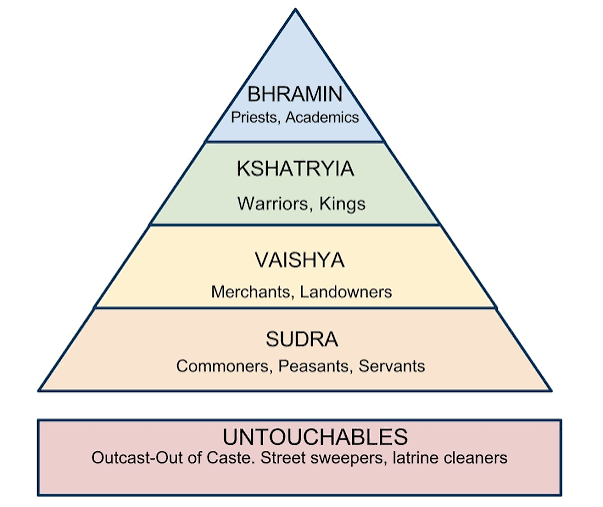
Another argument for keeping caste out of legislation is that it essentially associates South Asians with the caste system whether they like it or not. Which is why the overwhelming majority of Hindus and South Asians who responded to the UK consultation opposed reifying it in the language of law.
Many LGB people feel exactly the same way about the government reifying “gender identity” in law: it’s a hazy concept that is strongly associated with us, but which many of us don’t want to be forcibly associated with. Gays who oppose the whole gender identity ideology are in many ways a lot like Hindus living in the UK who oppose the caste system: they are a subgroup within a minority group, who are at risk of discrimination because the majority fails to recognize and protect them.
There’s one big difference between caste and gender identity, though: “gender identity” proponents want to see the label reified in law beacuse it confers advantages to its believers at the expense of everyone else — they benefit from it. There is a sizeable activist group who want their identity to be forced on everyone else. Whereas with caste, it’s the opposite: there is a sizeable activist group who want out of the discrimination they face because caste is imposed on them against their wishes. It’s lower castes who have it imposed on them, whereas with gender activists, it’s everyone else, ordinary men and women not involved in gender world and just trying to go about their business, who end up losing their rights.
The draft bill to “ban conversion therapy practices” is a trojan horse campaign, mounted by extremist “gender identity” true believers, whose primary objective is to insert their mystical concept of gender identity into law, thereby reifying it and making it “official” and “real”, and forcing everyone else in the country to play along with their personal way of dividing and organizing and categorizing and grouping society.
Those who oppose this legislation should be bringing forward the parallels with caste legislation, and driving home the point that this is a quasi-religious activist group that is motivated to impose its own discriminatory worldview on everyone else.


Leave a Reply