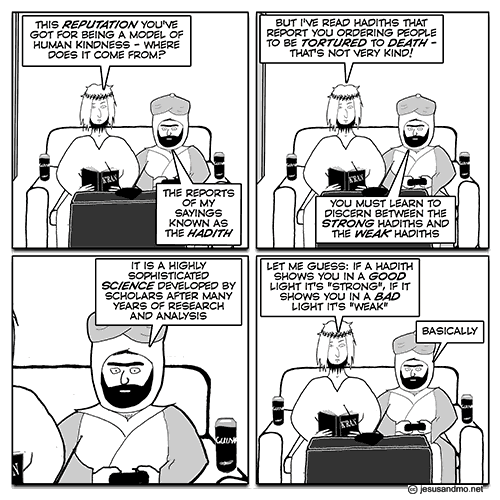
Pause the execution

Dec 9th, 2015 11:02 am | By

The case of the Sri Lankan woman who was scheduled to be stoned to death in Saudi Arabia for “adultery” is going to be reviewed. That’s good news. Let’s hope they “review” the case so thoroughly that they decide to send her home instead of torturing her to death.

Harsha de Silva, the deputy foreign minister [of Sri Lanka], told parliament on Tuesday that an appeals court in Riyadh, Saudi Arabia’s capital, has decided to hear the case again following pleas by Sri Lanka’s foreign ministry.

The 45-year-old woman, who is married with two children, was working as a maid in Saudi Arabia. She was sentenced to death in August. The unmarried Sri Lankan man convicted alongside her was sentenced to 100 lashes. The foreign ministry has not revealed their identities.

Sri Lanka’s foreign minister, Mangala Samaraweera, met an official from the Saudi embassy in Colombo last week and expressed Sri Lanka’s concerns about the case. Samaraweera has also requested to speak to Saudi Arabia’s foreign minister to seek clemency for the woman.

While they’re at it, they might consider adopting a more humane and reasonable and rights-respecting system of laws.


Reform

Dec 8th, 2015 5:25 pm | By

The NSS reports:

A coalition of Muslim writers, activists and politicians has launched a “Muslim Reform Movement” rejecting violence and calling for a defence of secularism, democracy and liberty.

The reformers have issued a Declaration defending gender equality, freedom of speech and freedom of religion, stating that they are for “secular governance” and “against political movements in the name of religion.”

They have called for the separation of “mosque and state” and emphatically reject the “idea of the Islamic state”.

Activists from the group stuck their Declaration of Reform on to the front door of the Islamic Centre of Washington, a mosque the movement described as “heavily influenced by the government of Saudi Arabia”.

The preamble to the Declaration states: “We are Muslims who live in the 21st century. We stand for a respectful, merciful and inclusive interpretation of Islam. We are in a battle for the soul of Islam, and an Islamic renewal must defeat the ideology of Islamism, or politicized Islam, which seeks to create Islamic states, as well as an Islamic caliphate.

The signatories add that they “support the Universal Declaration of Human Rights, which was adopted by United Nations member states in 1948.”

That’s key. Islamists don’t support the UDHR. The Cairo Declaration is an alternative DHR that makes all the rights subject to compliance with Sharia. If a stated right doesn’t comply with Sharia, out it goes.

Rejecting violence, the preamble goes on: “Facing the threat of terrorism, intolerance, and social injustice in the name of Islam, we have reflected on how we can transform our communities based on three principles: peace, human rights and secular governance. We are announcing today the formation of an international initiative: the Muslim Reform Movement.”

The founders of the group include Muslims and public figures from Canada, the UK and the United States, including Usama Hasan of the UK-based Quilliam Foundation.

The organisers are now calling for support from “fellow Muslims and neighbours”.

The Declaration says the movement stands for “universal peace, love and compassion” and rejects “violent jihad”.

“We stand for the protection of all people of all faiths and non-faith who seek freedom from dictatorships, theocracies and Islamist extremists.”

They reject blasphemy laws and sexism.

“Every individual has the right to publicly express criticism of Islam. Ideas do not have rights. Human beings have rights. We reject blasphemy laws. They are a cover for the restriction of freedom of speech and religion. We affirm every individual’s right to participate equally in ijtihad, or critical thinking, and we seek a revival of ijtihad.”

Farahnaz Ispahani, a former Pakistani politician and signatory of the Declaration, said: “If Muslim minorities in non-Muslim countries are to be protected, we must demand the protection of non-Muslims within Muslim-majority countries.”

The Declaration also singles out gender equality and the protection of women’s rights, stating: “We support equal rights for women, including equal rights to inheritance, witness, work, mobility, personal law, education, and employment. Men and women have equal rights in mosques, boards, leadership and all spheres of society. We reject sexism and misogyny.”

Good luck to them!


In light of recent allegations

Dec 8th, 2015 5:06 pm | By

The president of the Goldsmiths ISOC has resigned, because too many people had saved his homophobic tweets and were giving him grief about them.

Goldsmiths Islamic Society (ISOC) President Muhammed Patel has resigned from his position after a motion of no confidence.

The society released a statement via its Facebook page today and although the group did not say what allegations were attributed to Patel that led to his resignation, it is believed that the President published a series of homophobic messages via his Twitter account, which has recently been deleted.

The committee have elected an interim leader who has yet to be named. Patel declined to comment when approached by The Leopard but an ISOC member assured The Leopard that Patel would be publishing an apology this evening.

Oh yes? Where is it then? It’s one in the morning there now, so evening is long gone.

Let’s look at that Facebook statement:

Goldsmiths Islamic Society Statement:

In light of recent allegations attributed to, Muhammed Patel, a meeting was called to discuss a motion of no confidence. Soon after Muhammad tendered his resignation and it was accepted by the committee.

In the interim, the committee will appoint an acting president to serve for the remainder of the academic year.

The committee would like to extend gratitude to all societies on campus specifically the FemSoc and LGBTQ societies’ for their continued support in the face of inaccurate assertions, threats and Islamophobic messages. Hate speech of any kind has no place in our society.

Goldsmiths Islamic Society

But of course Maryam didn’t engage in any hate speech. It’s kind of hate speech-like to say she did.

And notice that they don’t say what the allegations were. Brave heroes.


When is it appropriation and when is it identity?

Dec 8th, 2015 4:10 pm | By

Another resolution from the NUS Women Conference:

Motion 512: Dear White Gay Men: Stop Appropriating Black Women

Conference Believes:

1. The appropriation of Black women by white gay men is prevalent within the LGBT scene and community.
2. This may be manifested in the emulation of the mannerisms, language (particularly AAVE- African American Vernacular English) and phrases that can be attributed to Black women. White gay men may often assert that they are “strong black women” or have an “inner black woman”.
3. White gay men are the dominant demographic within the LGBT community, and they benefit from both white privilege and male privilege.
4. The appropriation of Black women by white gay men has been written about extensively. This quote is taken from Sierra Mannie’s TIME piece entitled: “Dear white gays, stop stealing Black Female culture”:

“You are not a black woman, and you do not get to claim either blackness or womanhood. There is a clear line between appreciation and appropriation. I need some of you to cut it the hell out. Maybe, for some of you, it’s a presumed mutual appreciation for Beyoncé and weaves that has you thinking that I’m going to be amused by you approaching me in your best “Shanequa from around the way” voice. I don’t know. What I do know is that I don’t care how well you can quote Madea, who told you that your booty was getting bigger than hers, how cute you think it is to call yourself a strong black woman, who taught you to twerk, how funny you think it is to call yourself Quita or Keisha or for which black male you’ve been bottoming — you are not a black woman, and you do not get to claim either blackness or womanhood. It is not yours. It is not for you.”

I’m sure you see the problem before I point it out. Isn’t that…trans-exclusionary? To tell men they’re not women, and that they don’t get to claim womanhood? Isn’t it trans-exclusionary to tell anyone that, because if people identify as women then they are women? Isn’t Sierra Mannie doing a very wrong thing by saying that? Aren’t women absolutely forbidden to say that anyone is not a woman? That’s certainly the impression I’ve been getting.

Conference Further Believes:

1. This type of appropriation is unacceptable and must be addressed.
2. Low numbers of Black LGBT women delegates attend NUS LGBT conference. This can be attributed to many factors, one of which may be the prevalent appropriation by white gay men, which may mean that delegates do not feel comfortable or safe attending conference.

But there again – isn’t it trans-exclusionary to call it “appropriation” when men pretend to be identify as women?

Conference Resolves:

1. To work to eradicate the appropriation of black women by white gay men.
2. To work in conjunction with NUS LGBT campaign to raise awareness of the issue, to call it out as unacceptable behaviour and, where appropriate, to educate those who perpetuate this behaviour.

How do they know the white gay men aren’t women? How do they know?


Shrinking the secular space

Dec 8th, 2015 12:53 pm | By

The filmmaker Jennifer Hall Lee asks why British women are being called “Islamophobes.”

“We are in the ISIS era.”

Houzan [Mahmoud], a Kurdish woman who is a representative of the Organization of Women’s Freedom in Iraq, made that proclamation at the recent Feminism in London conference. She was on a panel of four feminists called, “Unlikely Allies: Religious Fundamentalism and the British State,” that focused on the connection between Islamic fundamentalism and British law.

I attended this panel to hear Maryam Namazie, an Iranian Muslim-born woman who lives in London and is a spokesperson for One Law for All, a group that opposes Sharia law in Britain. I was unprepared for the bluntness of the talk about ISIS and the extreme pressure progressive feminists are putting on these women to be silent and to curb their critique of what they see as an untenable situation for Muslim women there.

When Mahmoud said that “We need to reclaim the left and feminism,” and that it is a “historical task and necessity,” the audience erupted into applause. Clearly this is an important topic of discussion in the UK.

But why would these women on this panel feel the need to reclaim feminism? Because they are branded as Islamaphobes by progressives and feminists in the UK for their criticisms of Sharia councils and Islam.

“Progressives” like the LGBTQ+ Society at Goldsmiths; “feminists” like the Feminist Society at Goldsmiths.

I’m fascinated with the new dynamic that’s being creating between what were once opposing groups – feminists and fundamentalists. But now some feminists are aligning with fundamentalism? I believe the use of the word “Islamophobe” is being used as a tool to shut down critical thought about male-dominated religions and the negative impact they have on women. As Namazie said, “Progressives no longer believe in self-expression, they believe in self censorship.”

So what does this all mean for me? I am Catholic and have long been a critic of the Catholic Church. Catholicism is rife with sexism. I consider it a male-dominated religion that preserves the top power spots for men. Moreover, the gown-wearing priests, who boldly opine on women’s roles in society and private lives, are just a religious variation on ‘mansplaining.’

To deny women the opportunity to be priests is discrimination. My right to say so does not make me a Catholic-phobe.

And “Islamophobe” isn’t parallel to “Catholic-phobe” anyway; it would have to be “Muslim-phobe” to be that.

Mahmoud says of the word Islamaphobia, “I think this in itself is racist.” She compared the well-worn history of progressives and feminists who have criticized religion as part of their feminist analysis of patriarchy. As a woman with a Muslim background she claims the same right. Yet these same leftists do not support her right to reject religion, as they would probably support mine.

She refers to these progressives as “white people [who] can ridicule, criticize and break away from Christianity.” She saw discrimination in the way liberals use Islamaphobia to shut down protestors because they are “people from a Muslim origin [who] reject their religion and all forms of religiosity.”

[Gita Sahgal] said, “Multi-culturalism and multi-faithism shrinks secular space.” In other words, by seeing society as just a collection of homogenous groups of people identified by religion we deny their individuality as citizens.

We also give short shrift to all the other ways people can “identify,” in other words all the other things that matter to people.

We are living in a strange time of shifting allegiances, demands for censorship and pleas for safe space. And feminists, when they align with the male religions who attempt to shut down the anti-religion feminists, shrink the secular space.

In fact, a dramatic moment at the panel discussion crystalized the debate when towards the end of the presentation, as audience members were asking questions of these brave feminists, a white woman stood up and criticized them. She labeled them Islamaphobes and then abruptly left the room, clearly not willing to engage in further discussion.

Mahmoud says in general of her critics, “Their criticism will not silence us, because we have a just cause, we own it, we know more about it and we continue to expose all religions for their hypocrisy and women hating.”

When feminist allies turn their backs on secular feminists in favor of allegiances with male-dominated religious groups, we are indeed living in the ISIS Era.


But we are also resisting.


They are trained to be activists and reformers

Dec 8th, 2015 10:43 am | By

The NY Times has more on what the FBI and other agencies are discovering about Tashfeen Malik and Syed Farook. None of it is cheerful or consoling. None of it says: this was a peculiar, one-off event with peculiar motivations that are most unlikely to be duplicated anywhere else. It says the opposite of that.

The main point is that they were both “radical”; they no longer think that Malik “radicalized” Farook.

Investigators say they have learned through interviews with people who knew Mr. Farook for several years that he had militant views before he met Ms. Malik online and married her in Saudi Arabia.

“At first it seemed very black and white to us that he changed radically when he met her,” said one of the officials who declined to be identified because of the continuing investigation. “But it’s become clear that he was that way before he met her.”

And she was probably that way before she met him.

A fuller portrait of Ms. Malik emerged in Pakistan, where she completed a degree in pharmacology at Bahauddin Zakariya University in Multan.

Ms. Malik also spent a year studying at an Al-Huda center, a conservative religious school for women in Multan, a city in central Pakistan, officials said Monday. Officials at the center said she enrolled in an 18-month course to study the Quran in 2013, just as she completed her degree at Bahauddin Zakariya. But she left before finishing the course, telling administrators she was getting married.

There you go, you see – 18 months to study one book. What can anyone get from such a thing but fanaticism? No one book is the answer to everything, or the guide to everything. That’s all the more true when the one book is not one by a physicist or a philosopher but rather one by a purported prophet who lived a very long time ago and had minimal education. You could perhaps study, say, Montaigne’s essays for 18 months without wasting your time. They make up a very fat book and they provide material for further exploration. He’d done a lot of reading himself, and his mentality was the opposite of a prophet’s mentality. But Mohammed was no Montaigne, in so many senses. Montaigne detested religious warfare and coercion; Mohammed loved nothing better. Immersion in the Koran is not a healthy thing.

Farrukh Chaudhry, a spokeswoman for Al-Huda, an international chain of religious schools geared toward educated and often affluent women, said that Ms. Malik stopped her studies with the group in May 2014. A few months later, she was granted a K-1 visa, known as a “fiancé visa,” that enabled her to travel to the United States, according to American officials.

Critics in Pakistan have long said that Al-Huda, which urges women to cover their faces and to study the Quran, spreads a more conservative strain of Islam. But it has never been directly linked to jihadist violence.

That’s beside the point, unfortunately. That’s the festering sore at the heart of this whole subject. Narrow pious religious fanaticism tends toward hatred of others who don’t share the religion, and thus ultimately toward violence. Not all religious fanatics go on killing sprees. Yay, what a relief, thank fuck for small favors. Not all do, but some do, and that’s a fact.

Ms. Malik and fellow students studied and interpreted the Quran — a typical line of study at Al-Huda, which focuses heavily on Islamic scripture. “Quran for all; in every hand, every heart,” reads the slogan on the group’s website. Before leaving in May 2014, Ms. Malik had requested information about completing her studies by correspondence, Ms. Chaudhry added. “We sent her the documents by email, but never heard back,” she said.

Al-Huda, founded in 1994, sometimes draws women who turn to the group after their children have grown up, sometimes causing friction in their families as less pious members complain of being pressured to conform with a more conservative family lifestyle.

The more piety leads to the more coerciveness. It would be nice if more piety always meant more Quaker-type virtues, but it doesn’t.

“They are trained to be activists and reformers, bringing people back to what they call the ‘real’ Islam, true and pure,” said Faiza Mushtaq, an assistant professor of sociology at the Institute of Business Administration in Karachi, whose Ph.D. study focused on Al-Huda.

And that’s why they’re dangerous.

The organization’s founder, Farhat Hashmi, is based in Canada, but she has a large following in Pakistan, which has grown partly through the use of social media. Officials with the group emphasize that while it is conservative, it has no links to violence. Critics largely accept that idea, while countering that the group may foster a dangerously narrow mind-set.

Exactly. The fact that conservative-religious group X doesn’t tell its members to pick up the gun doesn’t mean it doesn’t inspire or motivate them to do so.

“Religious conservatism and piety are not the only thing institutions like Al-Huda spread,” said Husain Haqqani, a former Pakistani ambassador to the United States now at the Hudson Institute, a think tank in Washington. “Their teachings have a strong dose of ‘Muslims are destined to lead the world’ and ‘the corrupt West must be confronted.’ ”

Religious zealotry is what it is, and not something else.


The right guy for the job

Dec 7th, 2015 5:46 pm | By

The Vatican. Again.

A group representing victims of sexual abuse at the hands of Catholic priests has blasted the San Diego Catholic Diocese for appointing a priest who admitted to destroying documents detailing sexual assaults to oversee their sex abuse hotline.

The San Diego Catholic Diocese appointed a priest who destroyed documents detailing sexual assaults to oversee their sex abuse hotline. A priest who covered up sexual assaults will be overseeing a sex abuse hotline. A fox who dines on chicken every night will be guarding the hen house.

[Father Steven] Callahan is listed as the Victims’ Assistance Coordinator on the Roman Catholic Diocese of San Diego website — with a phone number to call the priest as well as an email address.

In a court deposition in 2007, after approximately 150 men and women filed suit against the San Diego diocese over sexual abuse claims, Callahan admitted to destroying documents in the early 90’s implicating a fellow priest.

According to attorney Irwin Zalkin, who was representing about third of the victims, Callahan admitted under oath that he destroyed personnel files in the early 1990s, with Zalkin calling it evidence of a cover-up.

“He claims he was following Canon Law, but no one in the diocese destroyed these records till he came along,” Zalkin claimed before adding, “They came in and destroyed priests’ confidential files, they destroyed important seminary records and engaged in a cover-up that precluded people trying to prove up their claims.”

Also? Besides? Fuck Canon Law. Priests are subject to the law-law, just like everyone else. Priests don’t get to protect rapists just because they’re priests.

“When nuns or priests are assigned to these hotlines, we believe church officials are using them to keep abuse reports quiet,” said Tim Lennon of SNAP in an emailed statement.”If they sincerely want victims to call and get help, bishops would have lay social workers—not ordained clerics or lawyers—respond to these deeply wounded and mistrustful individuals.”

It’s almost as if the church is using victims to tell them which priests they need to protect or send to a distant parish.


The subjects look back

Dec 7th, 2015 4:33 pm | By

An album of twenty photos of nature photographers at work.


The people’s flag is deepest red

Dec 7th, 2015 3:48 pm | By

Really?

A tweet:

Anne Thériault ‏@anne_theriault 9 hours ago Toronto, Ontario
“biological sex” and “female body” are definitely transphobic red flags

Really?

At that rate, is anything not a “transphobic red flag”?

And why female body but not male body?

Why is it always women and feminists who are in the cross-hairs? Why is there so much talk of TERFs but zero talk of TEMRAs? Why is it always women and feminists? Why is it always women and feminists?


The certainty of your virtue will lead you into cruelty

Dec 7th, 2015 11:30 am | By

Ah the way the left loves to devour its own. Nick Cohen says it has to do with the left’s self-image as the home of all righteousness.

Anyone who saw Gordon Brown and his aides in action, or watched the student left ban speakers for disagreeing with them, has found the myth of leftwing decency hard to swallow. But it has taken the triumph of Jeremy Corbyn’s “new politics” to finish it off.

Police are investigating a death threat madeagainst Neil Coyle, the Labour MP for Bermondsey, after he voted to allow the RAF to attack Islamic State in Syria. His colleague Diana Johnson said the abuse of Labour MPs who supported the action was horrendous. “‘Murderous cunt’ is one of the terms I have seen.”

Corbyn has ensured that everything the left once said about mainstream conservatives can be thrown back its face.

You want sexism? Long before the Syria vote, Liz Kendall and Yvette Cooper complained of misogyny, and not just from the Mail, which was more interested in Kendall’s “lithe figure” than her politics. You expect that from the Mail if you are a woman on the left. Indeed, you expect it if you are a woman on the right or any place in between. Cooper spoke with feeling at the Labour women’s conference about the shock she and Kendall felt at finding it in the one place she never expected it: the left, whose decent adherents called them “witches” and “cows” for opposing the great Corbyn.

Why? Self-righteousness, Nick says.

Brecht understood that the certainty of your virtue will lead you into cruelty. Leftwing men can treat women appallingly and leftwing agitators can mimic the language and tactics of the far right. They are so convinced of their righteousness they cannot admit their faults.

Leftists would behave better if they stopped acting like teenage vegetarians and found the honesty to acknowledge their kinship with the rest of compromised humanity. The Corbyn generation shows no sign of doing it. And it ought to be obvious by now that Labour people will be their targets.

Brecht’s communists spent as much time fighting social democrats as Nazis in the 1930s. The Corbynites’ real enemies are not Tories, whom they rather respect for standing up for the interests of their class, but Labour MPs who fail to show the required radical virtue and betray the leftwing cause. They don’t mutter darkly that there will be “no hiding place” for Tory MPs who voted in favour of bombing Isis. They don’t scream that Conservative women are “witches” and “cows”. They don’t deliver death threats to David Cameron.

Their virtuous hatred is righteously reserved for their own side and its ugliness will destroy the myth of leftwing decency more thoroughly than the right ever could.

 It sounds right to me, given the quantity of words I’ve seen devoted to ostracizing and libeling people for minor deviations from putative orthodoxy.


The whole system is stacked against women

Dec 7th, 2015 11:14 am | By

The Independent on sharia courts in the UK, via Machteld Zee, a Dutch researcher who did her PhD on the subject.

“The judges were very friendly,” she says. “We chatted between cases. The problem is not that they were mean but the foundation of their judice acts in a system of sharia Islamic law, in which the principle focus is making women dependent on their husbands and clerics.

“One judge said: ‘Under Islam, we should reconcile marriages even if there is violence’. They don’t care. It was shocking:

they would have you cling to a marriage.

“There are also unfair custody statements. The woman has no idea this is a religious institution and she should go to a secular court [for her children’s interests] – and once she finds out, a British judge won’t switch parents after a few months.

“But in 2001, the European Court of Human Rights ruled that sharia law is incompatible with liberal democracy.”

In a sidebar, the Indy quotes a horrifying passage of dialogue:

One case Zee witnessed, at the Islamic Sharia Council in London, involved a married couple with children, who asked if the woman’s first civil divorce was recognised religiously. It included the following exchange:

Qadi: “You as a Muslim female, you should have known that you need a Muslim judge or an Islamic court or council for a divorce. Who told you that it was enough?”

Wife: “My friends and family. The UK divorce does not count as anything?”

Qadi: “It is going to be a difficult case. We are going to ask our scholars to give you the answers… Marriage is an act of worship”.

Husband: “But I thought Muslims in a non-Muslim country need to abide by the laws of the land of the country they live in?”

Qadi: “A secular judge does not do religious divorces. We have Islam. Secular courts do not have Islamic laws. Can a kaffir [non-Muslim] come in and judge Islamic matters?”

He told them something that’s not true – or, to put it another way, they were talking at cross-purposes. The couple don’t need a sharia divorce, and they do need to abide by the laws of the land of the country they live in. The qadi is talking in the language of a cleric, from the point of view of a bossy, coercive religion. Yes, a “kaffir” can give a secular divorce to a Muslim couple, it’s just that the qadi doesn’t like it.

Her book Choosing Sharia? is based on the 15 hours of cases that she saw at the council in London and another at Birmingham Central Mosque Sharia Council, alongside her extensive research into sharia law and other reports on sharia councils. She also investigated the Jewish Beth Din religious court, where she interviewed two judges.

Ms Zee’s analysis is blistering: these courts all treat women as less than equal and are incompatible with human rights law.

The Indy quotes a woman who works in a sharia court and says that’s all nonsense.

Some campaigners feel even more strongly than Ms Zee. On Thursday 10 December, the International Day of Human Rights, groups including One Law For All will deliver a petition of more than 200 signatories to 10 Downing Street calling for the government “to dismantle parallel legal systems.”

They say that with cuts to legal aid and funding for women’s groups, vulnerable women – who might be taking their first steps away from an abusive relationship – are even more likely to go to sharia councils where those like Iranian Kurdish Women’s Rights Organisation’s Diana Nammi believe: “The whole system is stacked against women”.

Supporters of multiculturalism are reluctant to criticise sharia law, says Ms Zee.

Take a bow, Goldsmiths Student Union and Feminist Society and LGBTQ+ Society.


Violating Facebook’s standards

Dec 7th, 2015 10:22 am | By

Update: Facebook has restored it.

Facebook removed Simi Rahman’s post, so this time I’ll post the whole thing by way of an extra archive and a “fuck you” to Facebook.

Here:

Every Muslim humanist is asking themselves a question I first asked myself in September 2001.

How do you tell a radical Muslim from a moderate peace loving one?

And here is my train of thought.

The 9/11 hijackers reminded me of boys I had gone to school with in Dubai in the 80s and 90s. They were the same age, background, and modern enough to have listened to 80s pop and chased girls. Meaning that just like most young people in the Muslim world, we weren’t that religious.

So, I thought, maybe I could locate the differences between them and me, and at some point I would identify a breakaway point. Something they would do that I never would. And it took me a while to realize this, and now with the California shootings, it has reaffirmed for me, that indeed, when it comes to being able to tell a moderate from a radical in Islam, you can’t.

You really can’t tell until the moment before they pull the trigger, who is moderate and who is jihadi. Tashfeen has broken our moderate backbone, by revealing that she lived among us, unnoticed, normal, experiencing motherhood, enveloped in our secure community and yet, had radicalized.

And that’s the problem, that there are many others like her with exactly the same beliefs, who may not have been ignited yet by a radical cleric, but if the opportunity presented itself, they would follow. They’re like a dormant stick of dynamite, waiting for the fuse to be lit. The TNT is already in there.

What’s it made of? Not the 5 pillars, belief, charity, prayer, fasting and pilgrimage. Not the sayings of the prophet as to how to lead a good and just life. Not the celebration of Eid ul Fitr.

It possibly glimmers through in the fealty that Allah demands during the Eid ul Adha, when Abraham’s willingness to sacrifice his son as a sign of his superior faith is commemorated in a sacrifice and celebration very much like the American Thanksgiving, with family and food. But without the football. And oh yes, the fratricide.

It is there in the silence one must maintain during prayer, brooking no interruptions, because it would make the prayer invalid. It is there in the severity of the hijab when it is followed to a tee. Not a hair can show. It is there in the forced separation of men and women at social gatherings.

It is present in every act that is performed that excludes us from the mainstream. It is present in the very concept of Us and Them. Because the only way we remain Us is to reject Them. The only way to be an exemplary Us is to reject westernization at every turn. Halal only is a sham, constructed out of this notion of meat that has been cut a certain way. It’s the same meat. And yet there is a magical difference that people will attest to in all seriousness.

…And so, to understand the moderate mind, you have to envision it on a continuum from radical to middle, but the closer you get to liberal, there is a wall. It creeps up on you, in the condemnation of homosexuality, in the unequal treatment and subjugation of women, but it’s there. Beyond that wall that they are afraid to look over, for fear of eternal hell fire and damnation, is where the answer lies though. So being a Muslim moderate these days is like running a race with a ball and chain attached to your feet. A handicap. Unless you can imagine what the world beyond that wall looks like, you can’t really navigate it. If you’re so terrified of blasphemy that you refuse to look over, you’re forever stuck. Right here. And behind you is the jihadi horde, laying claim to real Islam, practicing it to perfection, as it is laid out in the Quran. A veritable rock and a hard place. I feel your pain. I’ve been there. And it was untenable.

I read, discussed, debated alongside many good Muslim young people from all over the world, in Internet forums, trying to argue our way to a solution, much like we are doing on social media right now. I knew I rejected the homophobia, I knew I rejected the subjugation of women. And it all remained a theory until I saw it in practice. In the drawing rooms of the Midwestern professional moderate Muslim. There was the discussion of whether the verse that allows a man to strike his wife instead actually means, he should strike her with a feather. As a doctor, I am a humanist first, and so the blatant homophobia was irrational, dangerous and something I stopped tolerating politely. I attended presentations at the mosque of videos from the Palestinian Territories, played to rouse the outrage of the gathered congregation.

And that’s when the absurdity started to really hit home. What in the world were we doing? We were training our children to kowtow without questioning an authority that we believed would keep them safe from evil western ways. And so the community’s children went to Sunday school, wore hijab, prayed and fasted. They were enveloped in a Muslim identity that was unlike any that I had experienced before. I was raised in a Muslim country in the Middle East and religion was something we kept in its place, somewhere after school, soccer and cartoons. Here was a more distilled, pure and, most dangerously, a context-free Islam. There were no grandmothers here to sagely tell us which parts of the Quran to turn a blind eye to. There were no older cousins here who skipped Friday prayers and goofed off with their friends instead. Oh no. This was Islam simmered in a sauce of Midwestern sincerity, and boiled down to its dark, concentrated core. This was dangerous.

As my children grew older, I grew more afraid. I had tolerated their father’s insistence on sending them to Sunday school, where mostly they played and learned a few surahs. But as they grew older I knew it would change. A sincerity would creep in to their gaze, teenage rebellion would find just cause in judging your less religious parents as wanting and inferior. Bad Muslims. How many teenagers have started to wear hijab before their own mothers? I’ve lost count. Mothers who found themselves in this dilemma would choose to join their child on this journey. They would cover too, and as such offered a layer of protection from the ideology by offering perspective.

I worried though, about the Internet, about radical recruiters posing as friends, finding willing and malleable clay in our unformed children. For we would keep them unformed. We would shield them from western influences in order to protect them, only to create a rift that could be exploited as an entry point. We would in essence be leaving our children vulnerable to radicalization.

And that is exactly what has been happening. The young girls from Europe and the US who have traveled to Syria to join ISIS, have done so because they’re looking for what all teenagers are looking for, a sense of identity, to differentiate themselves from their parents and find a separate identity, the thrill of rebellion, adventure. They can’t date, drink or dance, so they might as well Daesh.

This thought is what drove me to scale that wall. I dropped prayer, stopped feeling guilty for not praying. I drank alcohol, in moderation like most people do in the west, and I didn’t instantly turn into an alcoholic. I dropped the need to cover to my ankles and wrists, and wore regular clothes. Bacon. I mean, seriously, it’s bacon, I don’t have to explain how good it was. I turned to look back at the wall from the other side, and it was…a relief. I relief to lose that fear of apostasy. To realize there was no such thing, it was purely in my mind. The ideas that had worn a groove in my mind, the guilt, the anxiety, the self flagellation for being a bad Muslim, all were gone.

…We have to make the problem bigger. Instead of minimizing, we need to blow it up big and examine it and let go of this idea that a sacred text is unchangeable. Or unquestionable. We have to look at it instead as a humanism problem. Is Islam, in the way it is practiced and preached, humanistic enough? In that does it respect the personhood of a human being enough, and if it doesn’t, then what can we do about it.

We have to make it ok to walk away. We have to come out of this closet and into the light. Because none of us are safe anymore. And none of the old bandages will hold much longer before it becomes a full on carnage that we only have ourselves to blame for.


The Church of England won’t let go

Dec 7th, 2015 9:45 am | By

There’s a report out in the UK, about religion and diversity and public life yadda yadda…

And Malcolm Brown at the Church of England blog has a post about it. (Did I know there was a CofE blog? No.) Brown is slightly triumphalist, saying religion isn’t going anywhere so ha.

But he also does the thing religionists always do: he pretends we can’t do without religion because religion is the source of all the good things.

[T]he common assumption that religion is in decline and can safely be relegated to the margins of our cultural life is simply wrong. Patterns of religious observance and affiliation are changing, but religion shows no sign of going away or allowing itself to be relegated to the private sphere. The CORAB report understands this. It is precisely because religion remains a potent factor in understanding British life that the Commission set itself up in the first place. And it is good that the report strongly affirms the notion of the Common Good to which the great majority of the world’s great faiths are committed, and calls for much greater religious literacy among opinion-formers and policy makers.

Wait. Stop right there.

That is a shameless falsehood. It is not true that “the great majority of the world’s great faiths” are committed to “the notion of the Common Good.” That’s horseshit. It’s secular morality that focuses on the common good, and what it is and how we figure out what it is and how it relates to the many idiosyncratic notions of the good that individuals want to pursue. Secular morality. This world morality. Religions focus on an imagined other world, and especially, most of them, on an imagined other-worldly Divine Personage. Religions pay attention to the common good as an afterthought at best, and they define it in terms of the imagined other world and its ruling Divine Personage. Often they ignore the common good altogether in favor of the good of themselves –  the One True Religion.

It’s true that many people see their religion as a conduit for morality, for pursuit of the common good – but their religiosity can always confuse them about what the common good actually is.

And this is where the CORAB report misses its mark. It recognises the enduring social significance of religion and grapples with changing patterns of belief and non-belief. It sees some of the problems generated by the prevalence of the inaccurate story of religious decline and irrelevance in the face of “progress” – but it reaches, not for solutions that reflect how religious belief and religious institutions actually work in changing contexts, but for the fiction that the state should adopt some kind of neutral position in order to accommodate (and, presumably, manage) the diversity of religions and beliefs within society.

This is a fiction because nobody comes from nowhere. There is no neutrality; no “trusted umpire” to hold the coats whilst “religions and beliefs” slug it out in the public square. Secularism is a belief structure just as much as Judaism or Sikhism – though, arguably, with a less developed history, literature and philosophical depth.

No, it isn’t. Secularism is not “thick” in the way religions are; it doesn’t rest on willful belief in fictional entities; it doesn’t rest on “belief” in general. Secularism isn’t a belief system, it’s a methodology.

The fond belief that a secular society can somehow embrace all religions equally is contradicted by the fact that most of the great world faiths present in this country prefer to be part of a polity in which the historic religion of the country is part of the formal structures of governance, rather than a secular polity which marginalises all religions.

So, a clear endorsement of theocracy then: yes, clerics should be part of the state, backed by all the power of the state. Good plan; see Saudi Arabia for how well it works in practice.

And then Brown argues the opposite of what he just said.

A problematic assumption underlies much of the report’s reasoning – problematic, because, in a document which seeks to find ways forward acceptable across a spectrum of religions and beliefs, it adopts uncritically the narratives and priorities of one point of view. The root of the fallacy lies in the report’s erroneous assumption that the growing number of people who report that they have “No Religion” can safely be assumed to be, de facto, humanists and that, ergo, they can be adequately represented by humanist organisations – of which there is, of course, only one of any size.

The idea that “No Religion” means “Humanist” has underlain the public posture of the British Humanist Association for years. They have deployed it to argue, for example, that the funding for humanist chaplains in the NHS should reflect the proportion of people with “No Religion” in the country. The sleight of hand is possible because the terminology of “religion and belief” allows “belief organisations” to sit around the table alongside the representatives of world faiths, despite the fact that these secular member organisations only resemble religious organisations in a few respects.

A couple of paragraphs up, secularism was a belief system, but now no religion and humanism are definitely not belief systems. He seemed to be defining secularism broadly when he claimed it’s a belief structure, but now he defines no religion and humanism so narrowly that they have few beliefs. Looks like having it both ways.

In the end, the report’s apparent bias toward a version of liberal humanism may be less about lobbying than a failure to engage with more contemporary thinking and literature which can be found on the political left and right, among many of the great world faiths, and among many profound thinkers who espouse no religion or belief. This is the rising tide of post-liberal thought which understands that neutrality is a myth which tries to contain and control plurality whilst claiming to support it. Post-liberals value, instead, the reality of embeddedness in social groupings and the richness of narrative-formed community.

“Post-liberal thought” – I hadn’t heard of that before. Is it a new word for postmodernism? Whether it is or not, it’s creepy. It’s basically the idea that you can’t have freedom, because “embeddedness” is better.

We have seen in recent weeks how secularist assumptions of “neutrality” fail to reflect the imagination and priorities of our apparently irreligious population. The furore over the church’s “Just Pray” initiative which saw an advert based on the Lord’s Prayer banned by the cinema chains to almost universal public opprobrium (even Richard Dawkins weighed in against the cinemas), shows that modes of religious observance are changing but that secular neutrality is no solution. The significance of prayer has also been shown in the way school children have valued the opportunity to use the “anachronism” of collective worship to deal with the emotional aftermath of dreadful events like the Paris shootings. Abolishing collective worship would leave no space to express corporately this aspect of being human – and approaching the moment without specific reference to some religious or belief tradition is impossible. It could be Islam, it could be humanism, but in reality, the historical embeddedness of Christianity in Britain means it is to the Christian tradition that people turn when, despite describing themselves as having “no religion” they need to acknowledge the profundity of a shared experience too overwhelming for propositional knowledge to handle.

It’s such a coercive mentality, this. To tell us that “approaching the moment without specific reference to some religious or belief tradition is impossible” is sheer bullying. It’s not impossible at all, and clerics should stop telling us it is.


Siblings, Not Cisters

Dec 6th, 2015 5:43 pm | By

NUS women had a conference last March. They issued some resolutions. Some of them are blood-curdling. Like this one for instance:

Motion 405: Trans Inclusion in the Women’s Campaign: Siblings, Not Cisters

See what they did there? Cisters? Sisters is a bad word, because…because it means female sibling, and there are trans people, so we can’t use words that mean female or male any more – like woman for instance. So it turns out that trans women aren’t women? Because it would be not inclusive to call them that?

Conference Believes:
1. The student women’s movement must strive to be a trans inclusive environment.
2. The definition of Women for the NUS Women’s Campaign is “all who self-define as women, including (if they wish) those with complex gender identities which include ‘woman’, and those who experience oppression as women.” This contains people whose preferred pronouns are not “She” or “her” (e.g “they”) and that they do not identify with the term “sister”.
3. The use of the term “sisters” is exclusionary of some women.
4. There are more than two genders and we should always recognise this.
5. Misgendering someone is an act of violence.
6. When women know each other within in a personal capacity or within certain cultures and religions, the term “sister” can be appropriate.

They’re serious. They think the word “sisters” excludes some women. Well what women? Not trans women, surely, because the word “sisters” wouldn’t exclude them if the word “women” didn’t – so what the fuck are they talking about? What do they even think they’re talking about?

And then – of all the things to get rid of – the lovely practice from union organizing and civil rights work and feminism and other progressive movements of calling each other sister and brother – of all the things to get rid of.

Oh and also? Misgendering someone is not an act of violence.

It may be extremely unkind and insulting, when done deliberately; I strongly reprobate intentional unkindness; but that’s still not an act of violence. Rhetorical overkill ends up undermining itself.

If these people are the future…I feel very sorry for the future, that’s all. Global warming and this. It’s not fair.


Their feminism will be self-centered or it will be bullshit

Dec 6th, 2015 4:18 pm | By

Goldsmiths Feminist Society has its priorities straight. Not long after its statement of solidarity with ISOC (and against ASH and Maryam), it changed its cover photo.

Self Care – that’s what feminism is all about innit. Not solidarity with oppressed women around the globe, but care of the precious beloved self. Not repudiation of misogynist bullying theocratic men, but tender loving concern for the ever-fragile ever-needy Self.

Right.


Until the moment before they pull the trigger

Dec 6th, 2015 1:20 pm | By

A public Facebook post by Simi Rahman that has gone viral.

Every Muslim humanist is asking themselves a question I first asked myself in September 2001.

How do you tell a radical Muslim from a moderate peace loving one?

And here is my train of thought.

The 9/11 hijackers reminded me of boys I had gone to school with in Dubai in the 80s and 90s. They were the same age, background, and modern enough to have listened to 80s pop and chased girls. Meaning that just like most young people in the Muslim world, we weren’t that religious.

So, I thought, maybe I could locate the differences between them and me, and at some point I would identify a breakaway point. Something they would do that I never would. And it took me a while to realize this, and now with the California shootings, it has reaffirmed for me, that indeed, when it comes to being able to tell a moderate from a radical in Islam, you can’t.

You really can’t tell until the moment before they pull the trigger, who is moderate and who is jihadi. Tashfeen has broken our moderate backbone, by revealing that she lived among us, unnoticed, normal, experiencing motherhood, enveloped in our secure community and yet, had radicalized.

And that’s the problem, that there are many others like her with exactly the same beliefs, who may not have been ignited yet by a radical cleric, but if the opportunity presented itself, they would follow. They’re like a dormant stick of dynamite, waiting for the fuse to be lit. The TNT is already in there.

What’s it made of? Not the 5 pillars, belief, charity, prayer, fasting and pilgrimage. Not the sayings of the prophet as to how to lead a good and just life. Not the celebration of Eid ul Fitr.

It possibly glimmers through in the fealty that Allah demands during the Eid ul Adha, when Abraham’s willingness to sacrifice his son as a sign of his superior faith is commemorated in a sacrifice and celebration very much like the American Thanksgiving, with family and food. But without the football. And oh yes, the fratricide.

It is there in the silence one must maintain during prayer, brooking no interruptions, because it would make the prayer invalid. It is there in the severity of the hijab when it is followed to a tee. Not a hair can show. It is there in the forced separation of men and women at social gatherings.

It is present in every act that is performed that excludes us from the mainstream. It is present in the very concept of Us and Them. Because the only way we remain Us is to reject Them. The only way to be an exemplary Us is to reject westernization at every turn. Halal only is a sham, constructed out of this notion of meat that has been cut a certain way. It’s the same meat. And yet there is a magical difference that people will attest to in all seriousness.

I hope she’s not right. It’s a very grim outlook if she is.

She herself got out.

I dropped prayer, stopped feeling guilty for not praying. I drank alcohol, in moderation like most people do in the west, and I didn’t instantly turn into an alcoholic. I dropped the need to cover to my ankles and wrists, and wore regular clothes. Bacon. I mean, seriously, it’s bacon, I don’t have to explain how good it was. I turned to look back at the wall from the other side, and it was…a relief. I relief to lose that fear of apostasy. To realize there was no such thing, it was purely in my mind. The ideas that had worn a groove in my mind, the guilt, the anxiety, the self flagellation for being a bad Muslim, all were gone.

And now, looking in the rear view mirror, I cannot recall what that felt like. I can’t recall what believing used to feel like, because it’s not as if there’s an absence. It’s not like I miss it. No, in its place has come a more robust understanding of humanity, philosophy, history, human nature and yes, even of religion.

A realization that the future is everything. There is no heaven or hell. Or rather, we no longer need a heaven and a hell to curb us into moral behavior. We have evolved. We know more of the universe, too much to be afraid of it anymore. We know more of this earth, and we know that every human being is made of exactly the same material. There is no Us, no Them. There is only We. We need to move on. We need to break free. We need to scale the wall so we can push back against the forces that seek to snatch our children’s minds and bodies. We need to protect them, we need to inhabit our own intelligence instead of surrender it in the service of an archaic structure of beliefs that make absolutely no sense to follow in this day and age.

We have to break the chains in our own minds in order to do any of this. And it is scary. Especially when you’ve believed your whole life in the concept of blasphemy. Especially when you know that to openly come out and reject these beliefs would be to risk alienation, to be ostracized and maligned, rejected and alone. And in many cases, dangerous to your own person.

So maybe that is where we should start. By encouraging Muslims to create safe spaces to challenge the logical fallacies and inconsistencies, not between translation to translation, but between Islam and the modern world.

I think it is. I think we should encourage people to leave their religions, or at least to hold them as loosely as possible. Religions tightly held are not safe for human beings.


She knows betrayal when she sees it

Dec 6th, 2015 12:12 pm | By

An #ExMuslimBecause tweet from November 20 and [updated] yesterday:

Ex-Muslims Forum ‏@CEMB_forum Nov 20
Sent to us to tweet anonymously by an #ExMuslim woman who is afraid to speak up openly. #ExMuslimBecause

Embedded image permalink

Ex-Muslim Because:

My Dad, the sheikh said:

“There’s no such thing as rape in marriage, in Islam, you’re a liar.”

When I’d asked him to tell the man he’d married me off to at 17 to stop raping me. My own Dad!

 And the new photo yesterday:

#ExMuslimBecause cultural relativists like @goldfemsoc @lgbtqgold won’t silence us. Message from an #ExMuslim woman.

Embedded image permalink

 Message from a
closeted Ex-Muslim woman
to the people running
Goldsmiths “Feminist Society”
& “LGBTQ Society”.
Via @CEMB Forum

I know betrayal by those who should know better when I see it.

@goldfemsoc, @lgbtqgold, I’m looking at you! You traitors!

Shame on you, we won’t be silenced.

“Intersectional”, my arse, you fucking hypocrites.

Boom.


From the human rights angle

Dec 6th, 2015 11:33 am | By

P.K. Balachandran reports from Colombo in the New Indian Express:

Four Muslim Members of Parliament, including a cabinet Minister, shouted down Tamil National Alliance (TNA) MP M.A.Sumanthiran, when he mentioned the term “Shariah” while speaking in parliament on Friday on a Saudi Arabian court’s order to “stone to death” a Lankan women for committing adultery.

She was scheduled to be killed on Friday but the Saudis paused because she has appealed the sentence.

Sumanthiran, also a leading Supreme Court lawyer, said that laws regarding the mode of punishment in various countries should be looked at afresh, from the human rights angle. He mentioned stoning in Saudi Arabia, flogging in Singapore and the use of the electric chair in some states in the USA as examples of practices which need to be reviewed. He further said that countries cannot prevent people from across the world questioning laws which violate human rights and cannot use religion to stall intervention. He pointed out there has been international intervention in Sri Lanka to restore human rights in the island and Lanka has accepted it.

Quite right; well said. The Universal Declaration of Human Rights is a thing, and people across the world get to say so. We get to object to violations of human rights, and to talk about the institutions that perpetuate them. Religions should never be allowed to violate human rights or serve as justification for violations of human rights.

When the Tamil MP proceeded to ask if the Shariah law sanctions stoning to death, S.M.Marikkar, Rishad Bathiyudeen and two other Muslim MPs, shouted him down. Bathiyudeen insisted that Sumanthiran has no right to talk of Shariah law. Islam and Shariah law should not be dragged in when the entire House is engaged in saving the maid in question, Bathiyudeen argued. Sumanthiran’s contention that he had the right to speak on any religion so long as he is not offensive was rejected.

What nonsense. Saudi Arabia is an officially Islamic country, where Islamic law is the law and justifies the endless flagrant violations of human rights. Of course Islam and Sharia have to be “dragged in” when they’re at the root of this grotesque “punishment.”

Speaker Karu Jayasuriya’s pleas to the Muslim MPs to let Sumanthiran complete his speech fell on deaf ears. Even Minister Lakshman Kiriella’s assurance that anything hurtful to Islam could be expunged, failed to pacify the four Muslim MPs.

A defensive Sumanthiran said that he is not attacking Islam and that he is an avowed  friend of the Muslims. In fact, only recently, he had incurred fellow Tamils’ wrath when he described the en masse expulsion of Muslims from North Lanka by the LTTE in 1990 as “ethnic cleansing.”

Funny how it’s possible to do both, isn’t it. One can both defend Muslims against rights violations such as ethnic cleansing, and defend Muslims and non-Muslims against rights violations such as stoning to death and criminalization of sex, apostasy, atheism, not wearing hijab, and similar.


All that makes rational discussion virtually impossible

Dec 6th, 2015 10:35 am | By

Jamie Palmer takes a long hard look at the pro-Islamist left and its shameful behavior to Maryam and other ex-Muslims, secular Muslims, apostates, refuseniks.

And so it was that when ISOC misrepresented the event as an unhappy tale of marginalization and Islamophobia, both the Goldsmiths Feminist Society and the LGBTQ+ Society quickly released statements pledging their support and solidarity with ISOC.

“We support them,” FemSoc soberly declared:

…in condemning the actions of the Atheist, Secularist and Humanist Society and agree that hosting known islamophobes at our university creates a climate of hatred. 

Two days later, the LGBTQ+ Society came up with this:

We condemn AHS and online supporters for their islamophobic remarks, attitudes, and harassment. If they feel intimidated, we urge them to look at the underpinnings of their ideology. We find that personal and social harm enacted in the name of ‘free speech’ is foul, and detrimental to the wellbeing of students and staff on campus.

In a positively craven gesture, the Goldsmiths Student Union has since written to Namazie requesting that the recording of the event be removed from youtube. (She refused.)

Students, lefty students, siding with theocrats against their opponents and victims. Here’s a newsflash in the form of a generalization: theocracy can never be part of the left. Theocracy is inherently reactionary. Theocracy is all about arbitrary unaccountable power, and the left is all about resisting arbitrary unaccountable power. UK students really need to wake up and figure this out.

The dismal spectacle of radical queer activists, feminists, and sundry other progressives, professing solidarity with Islamists is at once fascinating and enraging. Whatever kind of higher education survives in ISOC’s utopian caliphate, it’s certain that no feminist or LGBTQ+ societies will be permitted to exist.

But for radical university students in the West, their lives of almost unparalleled opportunity, privilege, and comfort are a source of considerable guilt and anxiety. So conspiratorial notions of omnipresent oppression have been contrived against which they oblige themselves to struggle. This idea is supported by claims that liberal democracy is a sham, that objectivity is illusory, and that reason is elitist. And since all that makes rational discussion virtually impossible, debates about ideas are transformed into competing professions of woe, decided by whoever turns out to be subject to the greater degree of structural oppression.

And you know where that leads to? It turns out it leads to circular firing squads, where putative radicals purge their own radical colleagues while the actual oppressors sit back and laugh.

It would be bad enough if university activists were simply indifferent to Islamist ideology and its victims. But when they go out of their way to attack people like Namazie as a bigot and an oppressor, and to dismiss her arguments and experiences as therefore unworthy of consideration, they make the lives of all campaigners against fundamentalism considerably more difficult. Apart from the aggravation caused by having to deal with the abuse and defamation itself, it forces them to fight a war on two fronts.

I have seen Namazie speak a number of times, and on each occasion she has had to waste time explaining the exasperating moral blindness of people whose support for secularism and universal human rights ought to be a foregone conclusion. But those who recoil from politically incorrect music or an infelicitous joke find they have nothing to say about honor-based violence, forced marriage, the execution of gays and apostates, or the veiling, stoning, subjugation, and genital mutilation of women. Afraid to be seen to lend their support to racist and Imperialist ‘narratives’, they instead assuage their guilty consciences by denouncing those whose activism shames their silence.

Fortunately it’s not the whole of the left. Obviously it’s not: Maryam herself is very much of the left. The fight against theocracy is a left-wing fight. But while not the whole it is a dismayingly large fraction.


We have the right to exist in space

Dec 6th, 2015 9:37 am | By

The cabaret performer Lili La Scala took the late train home last night after a performance in London. She likes to use the 55 minute trip to wind down. Last night a bunch of guys had other plans for her.

I stepped on to the train and assumed my usual corner seat, the one right at the front with a little table. Within a minute or so, five chaps of a rather burly description with shaved heads and assorted football wear, had claimed the seats around me.

They tried to strike up conversation but I’m rather taciturn on my homeward journey so I fended off the questions. However, now I feel bad about that, it was bad manners to not want to talk about myself to gents I’d never met, so I thought I might remedy my error and answer them right here.

Where have I been? I’ve been to work.

“You’re beautiful.” Thanks. I wasn’t looking for a late night affirmation from five men I’ve never met. I’m not sure any lone woman would welcome this sort of attention over and over again. Whilst you stare at them in a rather obsessive way. But, you know, thanks.

But not really. Guys, don’t do that. Don’t treat women as public property. That’s a simple enough rule isn’t it? Not hard to grasp? Don’t treat women as public property. Don’t surround them. Don’t hedge them in with your burly bodies. Don’t pester them. Don’t try to force them to talk to you. If they’re happy to chat, that will be obvious; if they’re not happy to chat, leave them the fuck alone.

“Your eyes are blue. I like blue eyes. Blue is my favourite eye colour.”
And a few more times, just in case I hadn’t heard. Not creepy at all.

“Are you naked under your coat?”  No. No I’m not. It’s winter. Who wants to travel home on a train at 11pm wearing nothing but a coat in winter. And you can see my blue dress under my coat. So I’m not sure why you’d ask this question.

Am I a ghost? No. If I were a ghost, I’d certainly haunt somewhere more salubrious than a train.

“Stuck up cunt.” I’m not. I just don’t want to a) fuck you b) make inane conversation with five drunk men I’ve never met before. Who’ve already asked me if I’m naked under my coat.

What was that we’re always being told about how “cunt” is not a hostile epithet for women in the UK? How it names only men? 

And then there’s “stuck up” – which implies that the only polite, democratic, egalitarian thing for her to do is chat with anyone who wants to chat with her, whatever her own plans may be. In other words, she’s public property.

You want to cum on my face. That’s nice. Really nice. Such a kind offer but, you know, I’m on my way home from work. I’ve done a show this evening, my serotonin and adrenaline have been absorbed by those glorious, happy faces, so I’m kind of tired. It was a Christmas show, so wrangling the audience and persuading them to my will took a lot of energy.
Also, we’ve never met.

Oh, you touched my foot. It’s ok, I can move my foot over here, closer to my other foot and further away from your feet. I’d hate for you to get the wrong idea, like I’m enjoying the taunts, jibes and come-ons from all five of you. I mean, I obviously am, right? You chaps are having a huge giggle. And me? Well, I’m stony silent, staring at my phone with my headphones on (FYI, noise cancelling doesn’t mean total noise blocking), shrinking into the corner whilst you mime something that appears to be me gargling, no not gargling, gobbling your man seed. I wouldn’t go down the mime road, if I were you chaps. Though, it was utterly clear to me so maybe it could be a career path for you once you stop hassling women on trains.

What’s depressing by this point is that no passengers intervened.

At that point she stood up and told them off, then moved to another seat.

I have the right to travel home in silence.
I have the right to travel home alone.
I have the right to not make small talk with drunk men I’ve never met.
I have the right to not be intimidated

I have the right. Women have the right. Every single woman has the right.

Just take your words and your looks and your, frankly awful, mimes and just go to fucking hell, you pieces of shit.

You are not taking my right to feel safe away from me. I am woman and have the right to exist in space without the fear of unwanted, unasked for attentions.

I was worried. I was scared and I was shaken.

Women are not public property.