The Kamala Harris news has given me a second wind so I’ll go back to TERF wars an intro for a bit.
The next theme, after the “cis women and white fragility” bullshit, is “what do they mean it’s an ideology??”
The language of ‘gender ideology’ originates in anti-feminist and anti-trans discourses among right-wing Christians, with the Catholic Church acting as a major nucleating agent (Careaga-Pérez, 2016; Kuhar & Paternotte, 2017). In the last decade the concept has been increasingly adopted by far-right organisations and politicians in numerous American, European and African states. They position gender egalitarianism, sexual liberation and LGBTQ+ rights as an attack on traditional values by ‘global elites’, as represented by multinational corporations and international bodies such as the United Nations…
Here they’re mashing together lesbian and gay rights with trans activism, and calling it “gender egalitarianism” – but that’s not what it is. It wouldn’t be “racial egalitarianism” for white people to insist they “identify as” black and then bully the crap out of any black people who didn’t agree. That would be an insult, and nothing to do with egalitarianism. Same with the “gender is realer than sex” move.
Yet, what is actually meant by ‘gender ideology’ (along with anti-feminist uses of terms such as ‘genderism’ and ‘gender theory’) has not been clearly defined: as Elżbieta Korolczuk and Agnieszka Graff (2018, p. 799) argue, ‘these terms have become empty signifiers, flexible synonyms for demoralization, abortion, non-normative sexuality, and sex confusion’.
Now they’re mixing it up with feminism. No, “gender ideology” or “trans ideology” is nothing to do with abortion, it’s to do with men insisting, with menaces, that they can become women just by saying so, and that women have to embrace them as such or be punished to the fullest extent of the bully’s energy.
Ultimately, the growing social acceptance of trans and non-binary people has challenged immutable, biologically derived conceptualisations of both ‘femaleness’ and ‘womanhood’.
No it hasn’t. It’s feminism that does that. Trans ideology is undoing the work of feminism, not continuing it.
About that word “TERF” – it’s a tool of the powerless.
Certainly, TERF (like ‘cis’) is often used in angry commentaries online by both cis and trans feminists, either as an accusation (e.g. ‘you’re a TERF’) or an insult (e.g. ‘fuck off TERF’). Yet, it is important to understand and account for the power dynamic at play here. In examples such as those above, members of a marginalised group and their allies seek to identify, and express anger or frustration at, a harmful ideology that is promoted primarily by and in the interests of those who are systemically privileged as cis…
Definitely. Men who say they are women are the tragic marginalised group, persecuted by the domineering all-powerful women, as has been true since the beginning of time. Also “TERF” is not a slur, because TERFs choose to be TERFs.
This does not, however, mean that ‘TERF’ actually functions as a slur. Christopher Davis and Elin McCready (2020), for example, have argued that while the acronym can be used to denigrate a particular group, this group is defined by chosen ideology rather than an intrinsic property (in contrast to trans people for instance, or women). It is this denigration of a group defined by an intrinsic property that is necessary to constitute a slur. Moreover, in the case of ‘TERF’ the act of denigration does not function to subordinate within some structure of power relations (in contrast to acts such as misgendering, and sexist slurs such as ‘bitch’).
These three goons are sociologists, don’t forget. Marvelous what a grasp they have of power relations, isn’t it.
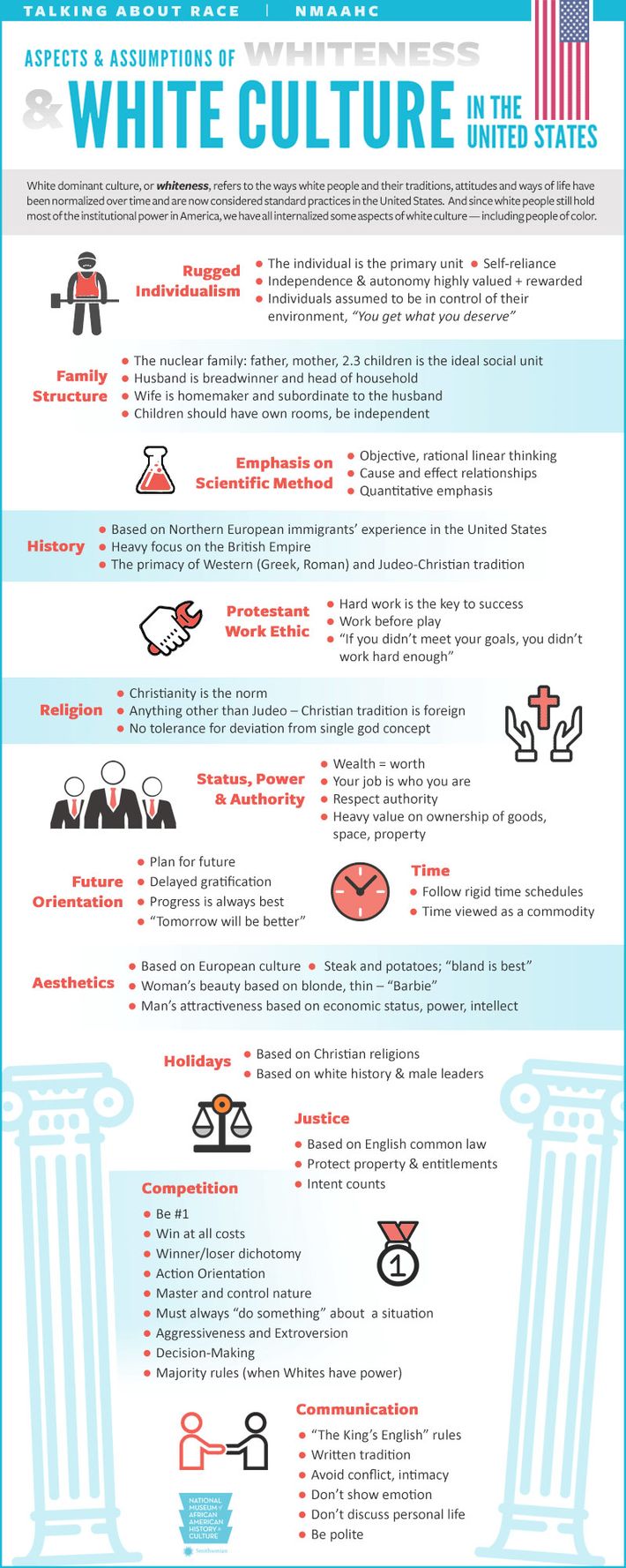
Furthermore gender critical feminists just don’t get it.
As noted above, ‘gender critical’ feminists’ arguments often run against (and ignore) decades of feminist theorising on the ontological and epistemic status of ‘womanhood’ and ‘femaleness’ (see also Hines, 2019). Gender scholars (e.g. Butler, 1990; Laqueur, 1990; Snorton, 2017; Warren, 2017) have shown how biological conceptualisations of sex are mediated by wider gendered as well as colonial and racialised norms that direct the social positions ascribed to different women and men, including one’s ability to claim a position as a ‘man’ or a ‘woman’ in the first place. Western colonial narratives have not only constituted colonised racialised subjects as less than human, but also framed ‘womanhood’ and ‘manhood’ (defined in terms of white, European heteronorms) as characteristic of human culture, which colonised subjects were seen as unable to replicate due to their ‘primitive’ status. They thus remained female and male, at best, but were not granted the status of women and men (McClintock, 2013).
Therefore, Caitlyn Jenner really is a woman so shut up.
Then they explain away the issue of men taking over women’s sport to their own satisfaction.
Sport regulators have a long history of anti-feminist stances and excluding women, including via implicitly ascribing inferiority to (all) women’s bodies for over a century (Erikainen, 2020). This exclusion has, however, disproportionately impacted racialised women from the Global South, in many ways because of the enduring discourses in the West that pre-position racialised (and especially Black) women and their bodies as unfeminine, failing to manifest normative ‘womanhood’ of the Western, white and middle-class form (Erikainen, 2020). Despite this, an alliance has emerged between powerful sport governing bodies and some ‘gender critical’ women’s rights advocates. The effect is that new iterations of older, gendered as well as racialised boundaries between ‘biological’ femaleness and ‘social’ womanhood are being drawn. Yet, it is women’s rights advocates such as Coleman herself who erase a deeply significant reality that has long been recognised in feminist (and especially Black feminist) politics: there is no single shared experience of female embodiment or ‘womanhood’ (Combahee River Collective, 1983; Koyama, this collection) – and neither chromosomes nor hormones ‘determine’ sex (Fausto-Sterling, 2000).
So it’s fine for a white man to steal a wrestling medal from a Samoan woman.
Sums it all up if you ask me.