Tag: Charlie Hebdo

  • Remember “Je ne suis pas Charlie”?

    Sarah Haider of EXMNA:

    https://twitter.com/SarahTheHaider/status/1082428246430543872

    https://twitter.com/SarahTheHaider/status/1082430182991056896

    That was Teju Cole. I remember reading the piece with disgust.

    https://twitter.com/SarahTheHaider/status/1082431004344811521

    https://twitter.com/SarahTheHaider/status/1082431835114737665

    https://twitter.com/SarahTheHaider/status/1082434286656081920

  • Vous êtes encore là?

    France24 tells us the Charlie Hebdo people say things have only gotten worse.

    Charlie Hebdo’s commemorative cover this week depicts both a Catholic bishop and a Muslim imam blowing out a candle flame that represents the light of reason. The headline bemoans a French society it says has become anti-enlightenment (“anti-lumières“).

    In an interview with AFP, Charlie Hebdo’s editor-in-chief Riss, who was the artist behind the cover drawing, said public attitudes had only grown less tolerant since the attacks.

    Not only has the tragedy faded from memory but so has the social significance of the event, he said.

    “One gets the impression that we have turned our backs to it, so in our opinion the antiquated attitudes are still there, even more so than four or five years ago.”

    “The hostility no longer only comes from religious extremists but now also from intellectuals,” he observed.

    In an editorial for the memorial edition – entitled “Are you still there?” – Riss put it even more bluntly: “Everything has become blasphemous.”

    On its double-page centrefold spread this week, the magazine depicted a host of world figures (whom it called “obscurantistes”) celebrating the anniversary of the attacks, from far-right leader Marine Le Pen to Pope Francis to US President Donald Trump.

  • Charlie

    The LA Times:

    The captions:

    Did we have to give him the nuclear codes?

    Obama: again a citizen like everyone else

    H/t Katrina

  • Guest post: If you say “I am not Charlie,” you are not a liberal

    Guest post by Josh Spokes.

    It is not “liberal” to tut-tut at Charlie Hebdo. It is not “liberal” to insist on turning your head away from misogyny and murder because the perpetrators are part of a group that experiences racist oppression.

    If you say “I am not Charlie,” you are not a liberal. You are rejecting enlightenment values. Universal human values.

    It does not matter who you vote for, how progressive your circle of friends is, or how mindfully you shop, or how faithfully you donate to NPR. You are not a liberal if you qualify your “objection” to murder by asking if maybe the Charlie Hebdo writers should have dressed their prose more modestly if they didn’t want to get murdered.

    Image result for charlie hebdo cover

    And you’re insulting your own intelligence and your own good moral core when you pass along what are now known lies – objectively false statements – about Charlie Hebdo. If you want to object to this, please do some wider reading first. Do not be confident that the prevailing wisdom among your liberal friends will guide you correctly.

    I made that mistake. I won’t make it again.

  • They checked

    Erik Wemple at the Washington Post again.

    As a member of the NBC News family, MSNBC last year elected not to show its viewers the cartoons of the prophet Muhammad that circulated in the Paris satirical magazine Charlie Hebdo — even after those cartoons became newsworthy for motivating a murderous terrorist attack on the magazine’s offices. “Our NBC News Group Standards team has sent guidance to NBC News, MSNBC, and CNBC not to show headlines or cartoons that could be viewed as insensitive or offensive,” an NBC News spokesperson said.

    So are they sticking to that this year? Still censoring cartoons at the behest of religious fanatics who like killing people?

    Erik Wemple
    After finding out that Charlie Hebdo cover satirizes God, MSNBC censors it
    Resize Text Print Article Comments 35

    By Erik Wemple January 7

    A copy of the latest edition of French weekly magazine Charlie Hebdo. (Benoit Tessier/Reuters)
    As a member of the NBC News family, MSNBC last year elected not to show its viewers the cartoons of the prophet Muhammad that circulated in the Paris satirical magazine Charlie Hebdo — even after those cartoons became newsworthy for motivating a murderous terrorist attack on the magazine’s offices. “Our NBC News Group Standards team has sent guidance to NBC News, MSNBC, and CNBC not to show headlines or cartoons that could be viewed as insensitive or offensive,” an NBC News spokesperson said.

    So how to handle the edition commemorating the anniversary of that attack? This one carries a depiction of God-as-terrorist, complete with a rifle strapped to his back and a line that reads, “One year on: the killer is still at large.”

    An MSNBC rep told the Erik Wemple Blog today that the network, consistent with last year’s approach, isn’t showing images of the cover. Then we pointed out that Mediaite’s Alex Griswold had snared a screengrab of MSNBC indeed showing the cover.

    In a reply that merits no further commentary from this blog, the MSNBC rep says that the network showed the current Charlie Hebdo cover up until it confirmed that the image was of God. “Once we found that out, we stopped showing it,” notes the rep.

    Oh well that’s different – they confirmed that the image actually is of the actual authenticated “God.” I have to respect that.

  • Not as some act of solidarity or anything

    This is infuriating to read – a smug, detached, sniffy review in the Globe and Mail of Charb’s book Open Letter: On Blasphemy, Islamophobia, and the True Enemies of Free Expression. The reviewer is John Semley, who wants us to know how little he cares.

    The night of the Charlie Hebdo shooting, just over a year ago, I went to a comedy show. Not as some act of solidarity or anything. Just because some friends were putting together a comedy show.

    That’s a shit beginning. Don’t go thinking he felt any solidarity with other writers, folks, because he didn’t.

    Like, I think, most people on Jan. 7, 2015, I was shocked and saddened by the attacks. Yes, it was a shock and sadness that has become, these days, so rote as to feel almost banal. But nevertheless.

    Excuse me? It’s not rote at all. I can’t begin to express how not rote it is. I have friends who could be targets of Islamist murderers. I know people who have been targets of Islamist murderers. I could be one myself for all I know. There’s nothing rote about it.

    I learned about Charlie Hebdo in the days (and even hours) after the attacks. I soon found myself at odds with sentimental liberal acquaintances on the Internet, who hastily championed the Hebdo jokers as martyrs in some imagined war against freedom of expression.

    Imagined? How dare he? The 11 dead at Charlie Hebdo weren’t imagined; Avijit Roy wasn’t imagined; Raif Badawi is not imagined; Taslima Nasreen is not imagined; Salman Rushdie is not imagined.

    And there’s nothing “sentimental” about objecting to what happened at Charlie Hebdo. What a loathsome thing to say.

    It became increasingly difficult to square the image of the slain Hebdo staffers as secular saints with their crude drawings depicting the Prophet Mohammed prostrated on his stomach, splayed anus pointed at the reader, or Jesus Christ having anal sex with God, drawings that began to strike me as inciting, offensive, sometimes racist and, more than anything, just stupid.

    That suggests he knew nothing whatever about Charlie Hebdo, and didn’t bother to find out – but feels quite entitled to shit on them anyway.

    This is not meant to diminish their deaths, or the tragedy of it. But making an overstated case for the political, social and satirical relevance of the kind of infantile scribblings that you might find on a White Power message board online strikes me as oversimplifying. That Charlie Hebdo was racist and idiotic doesn’t justify the murder of its staff. But it doesn’t justify their work, either.

    He’s that ignorant, yet he felt comfortable reviewing this book without remedying his ignorance at all. It’s shocking.

    Then he calls Charb’s book facile and opportunistic.

    What might otherwise have been distributed as a tatty, Xeroxed pamphlet plunked on Parisian newsstands is packaged by Little, Brown in a slim, hardcover volume, and tacked with a forward by The New Yorker’s Adam Gopnik (who apparently studied the history of cartooning and caricature in grad school). Even in presentation, it’s a garish artifact targeted at the same schmaltzy liberal simpletons who hailed the Hebdo shooting victims as sacrificial offerings in the West’s war against both Islam and free expression.

    How stupid of us; we should have said they were terrible and deserved to be slaughtered.

    Then he says Charb asks “moronically reductive questions” and then stops messing around and gets really abusive.

    Charb drapes his racism and intellectual feebleness inside basic counterintuitive inversions of logic, as if he’s playing the role of Baby Žižek. The basic thrust of Open Letter is, “Well, are not the real Islamophobes the ones who automatically assume that all Muslims would be offended by our silly doodles?” Again: no.

    The late Charb would likely brand me as one of the “terrorized intellectuals, moralizing old clowns and half-witted journalists” who rail against Charlie Hebdo. That’s fine. Freedom of speech and all that. But a dashed-off leaflet such as Open Letter proves to me that the real clowns, and the real Islamophobes, are the ones who stir sentiments of racism, xenophobia and religious persecution while hiding behind their constitutional protections and civil guarantees of freedom of expression like giggling cowards.

    This is the most disgusting thing I’ve read in a long time – and I read a lot of disgusting writing, as you know, because I share it all. Cowards! They knew they were threatened, and they refused to be silenced by that.

    I notice that John Semley runs no risk at all by writing this sneering dishonest piece of crap.

  • In praise of blasphemy

    Caroline Fourest on Charlie Hebdo.

    She worked there from 2004 to 2009 – five particularly intense and fascinating years, she says.

    The first time I met its audacious, fabled editorial team was as a young journalist, in 1997. Beloved by the radical left, Charlie is the last French paper to maintain a long tradition of trenchant caricatures of the religious, the sacred and the powerful, and to openly mock all forms of fanaticism. Its greatest covers, for many years, were devoted to poking fun at the Pope and the Catholic Church’s antiquated positions on abortion, sexuality and women’s rights.

    But fewer people know that Charlie has always been the rallying paper of the anti-racist French left. Its legendary cartoonists — Cabu, Charb, Tignous, Wolinski, Honoré, Luz, Riss — were behind the emblematic illustrations of the “SOS Racisme” movement that gained momentum in the 1990s and pushed back against post-colonial anti-Arab discrimination. When the killers stormed the newsroom on January 7, the staff were in the middle of an argument — as they often were — on how to help the situation of the young victims of discrimination.

    Joyce Carol Oates, Michael Ondaatje, Peter Carey, please note.

    Charlie became a target for Islamists after it republished the controversial Danish caricatures of Muhammad that caused a worldwide controversy in 2006, an affair that fanatics and (more significantly) many journalists naively described as an Islamophobic provocation. This interpretation, as well as being false, placed a target on the cartoonists’ backs.

    It got them killed, in other words.

    In 2006, at the time of the Danish caricature affair, I worked at Charlie, and dealt with fanaticism (in all religions) and the extreme right. I heard of the Danish story through a friend, an Iranian refugee in Denmark, and explained to my colleagues the atmosphere of threats and intimidation in which Jyllands-Posten decided to publish the cartoons. Embassies in Iran and Syria were burning. Islamic radicals cried “Death to freedom of expression” in London.

    We knew an illustrated magazine like ours couldn’t shy away from covering this instance of censorship and violence, the latest in a string of many others: Salmon Rushdie, Taslima Nasreen, the death of Theo Van Gogh in the Netherlands and, of course, the murder of Algerian journalists during the “black years.” We decided to cover this incredible story, and to publish the drawings that had ignited it. For the cover, we chose a cartoon that captured the spirit of Charlie: Muhammad in despair, lamenting the fanatics who committed atrocities in his name.

    We searched for the right image for a long time. We wanted something both funny and honest, representative of our editorial line: neutral on religion, but resolutely anti-racist.

    We were going to fight to make that understood. And we did fight — relentlessly. As one of the few journalists at Charlie who spoke English, I gave countless interviews in publications around the world to explain that it was crucial not to give in to threats of violence, especially as an opinion newspaper. We understood the risks. We received countless threats, but also messages of support, from French Muslims who thanked us for believing that they too could have a sense of humor when faced with religious extremism.

    They counted on their colleagues to stand by them, and many did, especially Turkish and Arabic ones.

    Other publications, mostly English-language, stabbed us in the back: by lying about our intentions, refusing to explain the chronology of events and the context of our actions, and by echoing the same accusations we heard from fanatics themselves.

    Reliving this same hell 10 years later, after the death of my colleagues, was deeply painful. The despicable accusation that Charlie was “Islamophobic” was not only wrong, it had killed and continued to put its survivors in danger.

    But it made the accusers feel clean and righteous, no doubt.

    Luz, one of the few cartoonists to survive the attack, drew the most poignant cartoon of his career in its aftermath: Muhammad, in tears, saying “Everything is forgiven.”

    I have it right here next to me.

    Still, this was “too much” — many called it blasphemy. As if the killers had been justified in their violence. Democrats, trembling with fear, asked us to respect the fact that the laws of the most fanatic and violent among us may become the laws that govern our independent publications and our secular democracies. After harassing us with requests to see Luz’s illustration, American and British channels subsequently censured it — all the better to criticize it, and without allowing viewers to make their own judgements. I was stopped when I tried to show it on live TV. It was a living nightmare.

    Remember that? I remember it. It was gruesome.

    https://youtu.be/LSxum5_G_tA

    Caroline was talking about the betrayal by journalists who refuse to show cartoons and she held up the Luz cover – and Sky News cut away to the presenter, who scolded Caroline and apologized to the viewers. It was a disgusting display of cowardice and brutality – brutality toward Caroline and toward everyone at CH and blasphemers in general – many of whom were bloodily hacked to death in the months after the slaughter at CH.

    Our colleagues were losing their minds. Unwilling to acknowledge their crippling fear, they stopped defending the free press, they deformed the facts, and censured themselves. They lectured us on journalistic “responsibility.” And we still haven’t woken up from this nightmare: Today, Charlie’s cartoons are repeatedly taken out of context, their message utterly distorted. Most recently, this happened with the drawing of the little Syrian boy, Aylan, found dead at the foot of McDonald’s golden arches, an image that denounced Western indifference to the plight of the refugees.

    But people pretended to think CH was insulting Aylan and mocking his death.

    I wrote a book called “Éloge du blasphème” (“In praise of blasphemy”: Why Charlie Hebdo is not ‘Islamophobic’”) about Charlie to bridge the gap between us. I wanted to dispel the common misunderstandings that distance us from the crux of this fight against terrorism and religious extremism — a fight that by necessity involves us all. Writing gave me back the sleep that the January 7 attacks had robbed me of.

    The book became a best-seller in France and Salman Rushdie, a man I admire infinitely, gave me his endorsement and support. But no American or British publisher was willing to publish the book. There’s no market for this kind of book, I was repeatedly told, in an attempt to justify their unwillingness to touch on something as explosive as the press’ right to blasphemy.

    Weasels.

    Thanks to the Internet and to this publication’s willingness to publish some pages below, I hope to touch a few readers. To renew a dialogue with those who “are not Charlie,” as a number of writers belonging to PEN International declared when the association decided to award Charlie with a prize. We all despaired. If they want to disassociate themselves from Charlie, then let them do so having truly made an effort to know and understand Charlie, and not on the basis of a cultural misunderstanding.

    We tried to tell them.

  • L’assassin court toujours

    The new Charlie Hebdo is on the stands, the anniversary edition. The slaughter was a year ago, January 7 2015.

    The murderer is still on the run.

    The Guardian reports on this by letting us know what the Vatican thinks of it – as if we’re all somehow obliged to pay attention to what the Vatican thinks of our struggles to break free of its tyrannical murderous god.

    The Vatican’s newspaper on Tuesday criticised French satire magazine Charlie Hebdo for a front cover portraying God as a gun-wielding terrorist to mark the first anniversary of a terrorist attack on the publication’s offices in which 12 people died.

    A million copies of the special edition hit France’s newsstands on Wednesday with a cover featuring a bearded man representing God with a Kalashnikov slung over his shoulder, accompanied by the text: “One year on: the assassin is still out there.”

    In a commentary, the Vatican daily Osservatore Romano said treatment of this kind towards religion “is not new” – and stressed that religious figures have repeatedly condemned violence in the name of God.

    So what? Who cares? Of course the Catholic church doesn’t like rebellion against religion; we know that already. Of course the Vatican is aligned with the enforcers of religion and not with escapees; we know that already too.

    “Behind the deceptive flag of uncompromising secularism, the weekly is forgetting once more what religious leaders of every faith unceasingly repeat to reject violence in the name of religion – using God to justify hatred is a genuine blasphemy, as pope Francis has said several times,” it said.

    That’s just a lie. It’s far from true that all “leaders” of for instance Islam “unceasingly” reject violence in the name of religion.

    The commentary added: “In Charlie Hebdo’s choice, there is the sad paradox of a world which is more and more sensitive about being politically correct, almost to the point of ridicule, yet does not wish to acknowledge or to respect believers’ faith in God, regardless of the religion.”

    And yet it’s the cartoonists and writers of Charlie Hebdo who were slaughtered a year ago – the Vatican could have the empathy and tact to remember that and refrain from abusing them some more when they point to that very fact. Instead it just adds more paint to the target on Charlie’s back.

    A week after the Charlie Hebdo attack, pope Francis condemned killing in God’s name but warned religion could not be insulted. “To kill in the name of God is an absurdity,” Francis told reporters on the papal plane on an Asian tour.

    While defending freedom of expression, he also cautioned “each religion has its dignity” and “there are limits”.

    “If a good friend speaks badly of my mother, he can expect to get punched, and that’s normal. You cannot provoke, you cannot insult other people’s faith, you cannot mock it.”

    In other words they had it coming. The assassin is still on the run.

  • It is mocking us for what we miss every single day

    Maajid Nawaz defends Charlie Hebdo at the Daily Beast.

    The outrage began when Arab and Turkish newspapers decided that Hebdomust be mocking little Aylan.

    But soon, non-Arab media also joined the fray and eventually certain race-equality activists, such as barrister Peter Herbert—chair of the U.K.’s Society of Black Lawyers and former vice chair of the Metropolitan Police Authority—were threatening legal action, stating that ‘Charlie Hebdo is a purely racist, xenophobic and ideologically bankrupt publication that represents the moral decay of France. The Society of Black Lawyers will consider reporting this as incitement to hate crime and persecution before the International Criminal Court.’

    Wow. I did not know that. That’s disgusting.

    But never in living memory has a magazine been as misunderstood as Charlie Hebdo. For the truth is, Charlie Hebdo is not a racist magazine. Rather, it is a campaigning anti-racist left-wing magazine. And its cartoons, which are so often misunderstood to be promoting racism, are in fact lampooning racism.

    That isn’t always obvious just by looking, in fact it often isn’t. But given all the circumstances – including the murders – people really ought to make the effort to do more than just look.

    And this brings us to satire. Satire is, by definition, offensive. It is meant to make us feel uncomfortable. It is meant to make us scratch or heads, think, do a double-take and then think again. It is supposed to take our prejudices, turn them upside down, reapply them, and make us think we’re seeing something we’re not, until we stop to question ourselves.

    Yes taste is always in the eye of the beholder. But that’s the whole point of goodsatire. It is not meant to be to our tastes. It is meant to challenge our tastes. Having our fundamental assumptions about life challenged is never a comfortable thing.

    That reminds me of something Tony Pinn said during that panel we were both on at CFI in June – “if social justice doesn’t make you uncomfortable, you’re not doing it right.”

    Not to our taste? OK. Make us cringe? Fair enough. Don’t like them? Fine. But whatever we do, let us not misrepresent these images. Juxtaposing images of a dead child next to offers of cheap food “meal deals” is not mocking little Aylan, it is mocking us. It is mocking us for what we miss every single day, hidden in plain sight, and we do not see it because this is how desensitized we have become to human suffering. No, those besieged, brave satirists at Hebdo are not mocking Aylan. They are mocking newspaper covers like this from the UK right-wing tabloid The Daily Mail in which an image of Aylan was—in a national newspaper— placed below an actual food deal. And how many of us noticed that on the day this Daily Mail cover went to print?

    We have met the callous bystanders, and they are us.

  • Les articles de Charlie Hebdo relève de la satire et non de la haine

    And now with extra added Le Figaro and Slate France.

    Malheureusement Slate France called me Olivia, but oh well. Ce n’est pas au sujet de moi Ce n’est pas à mon sujet.

    From Le Figaro:

    Jennifer Cody Epstein a fait partie des écrivains anglo-saxons qui se sont opposés à la remise du prix Courage et liberté d’expression au journal satirique français lors du gala organisé par l’association littéraire PEN. Un choix qu’elle déplore aujourd’hui.

    Jennifer Cody Epstein regrette amèrement le choix qu’elle a fait il y a quelques semaines. La romancière américaine a fait partie des 204 auteurs anglo-saxons qui ont signé la lettre ouverte qui stipulait leur opposition à la remise du prix Courage et liberté d’expression à Charlie Hebdo, par l’association mondiale littéraire PEN (Manhattan).

    Aujourd’hui, elle reconnaît avoir eu tort: «Ce fut une erreur de remettre en question la liberté d’expression. Les articles de Charlie Hebdo relève de la satire et non de la haine» a-t-elle écrit dans une lettre adressée à ses collègues écrivains…

    Un repentir salué par Salman Rushdie , l’ancien président du PEN American Center: «Respect à Jennifer Cody Epstein pour son acte honorable d’avoir admis son erreur à propos de Charlie Hebdo», a-t-il écrit sur son compte Twitter. L’auteur des Versets sataniques avait traité de «lâches» ses confrères écrivains opposés au prix, accusant ces derniers d’être «à la recherche d’une personnalité».

    From Slate.fr:

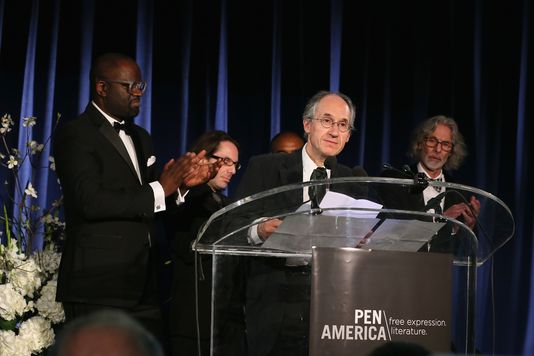
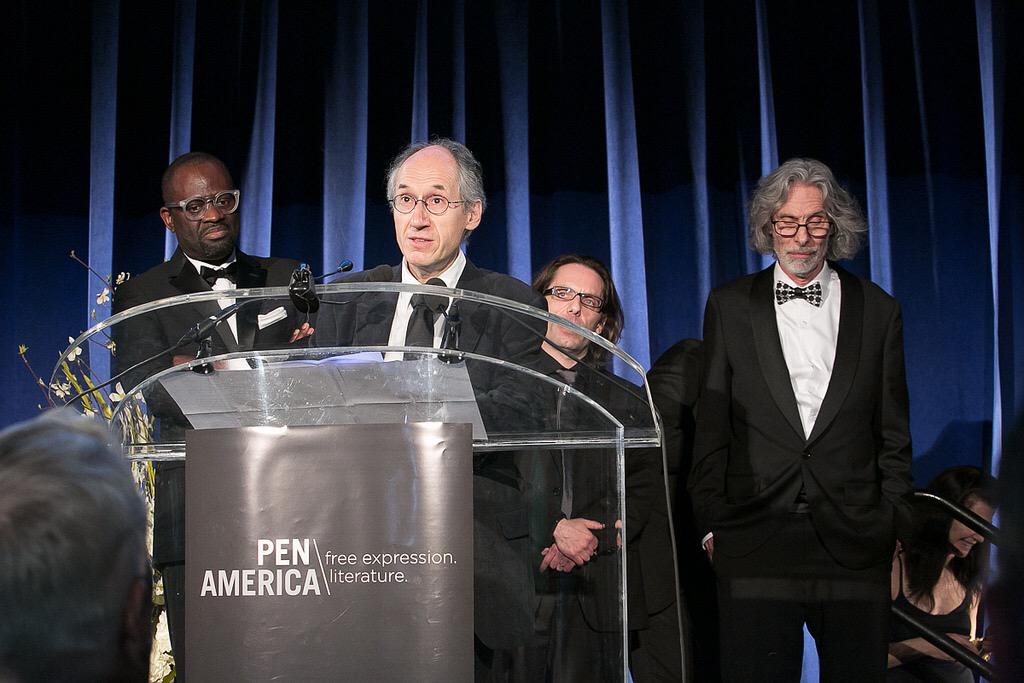
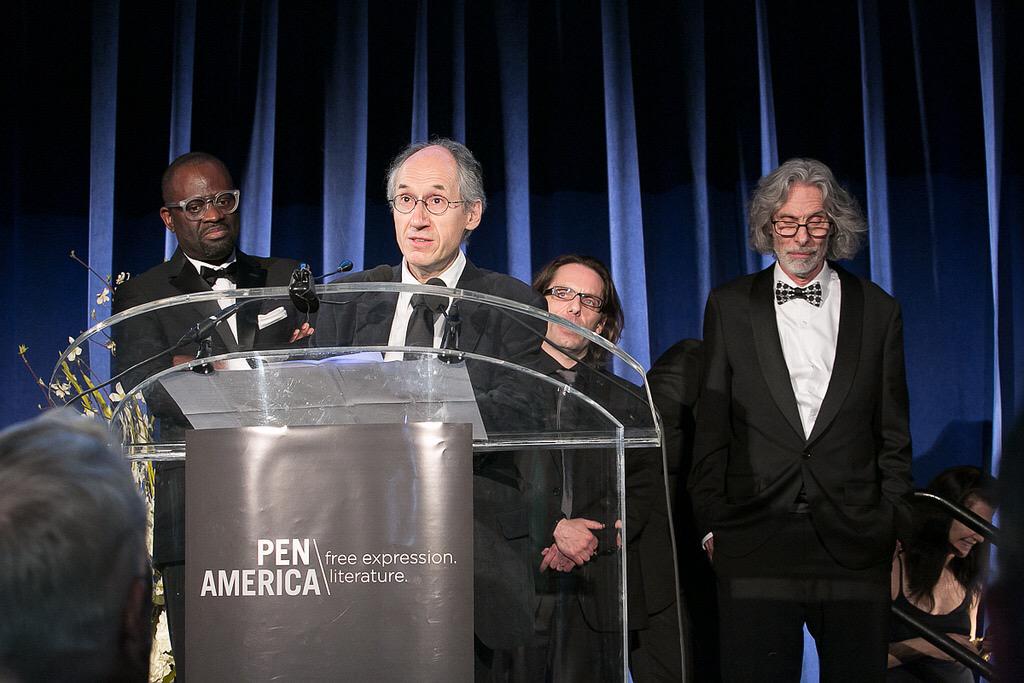
    Le 6 mai dernier, Gérard Biard, le rédacteur en chef de Charlie Hebdo, se rendait sur scène lors d’un gala, à New York, pour recevoir le prix PEN, sous une standing ovation.

    Mais si la salle semblait d’accord avec ce choix, un peu plus de 200 écrivains s’y étaient opposés en signant une lettre où ils s’en dissociaient. Dans cette lettre, publiée par The Intercept, s’ils insistaient sur la tragédie des événements du 7 janvier, ils expliquaient que pour eux, le PEN Club «ne fait pas seulement part de son soutien à la liberté d’expression [avec ce prix], mais il valorise également le sélection de contenus offensants: des contenus qui intensifient les sentiments anti-islam, anti-Maghreb et anti-arabes déjà très présents dans le monde occidental».

    Aujourd’hui, l’une de ces 204 signataires estime qu’elle a eu tort de se joindre à cette plainte.

    Sur son blog, Olivia Benson a repris la lettre qu’a envoyée Jennifer Cody Epstein aux organisateurs de la pétition:

    «Au cours de la dernière semaine, je me suis retrouvée à […] me poser de nombreuses questions, et j’en suis arrivée à la conclusion que ma décision –même si elle était bien intentionnée– était mal informée et (pour être honnête) mauvaise. […]

    Then Olivia Benson went out and collared a perp.

    Le geste a été salué par l’écrivain Salman Rushdie, a remarqué, de son côté, le Guardian. L’auteur des Versets sataniques, qui avait défendu Charlie Hebdo face à ces accusations, estime qu’elle fait une chose honorable en admettant son erreur à propos de Charlie Hebd, et se demande si d’autres vont la suivre.

    It’s excellent that this story is spreading.

  • Jennifer Cody Epstein’s letter to the anti-Charlie Hebdo faction

    I have permission to publish the letter that Jennifer Cody Epstein sent to her colleagues who organized the petition opposing the PEN award to Charlie Hebdo. In it she describes doing what I wish more people had done: finding out more and changing her thinking as a result.

    Herewith that letter:

    Dear Colleagues:

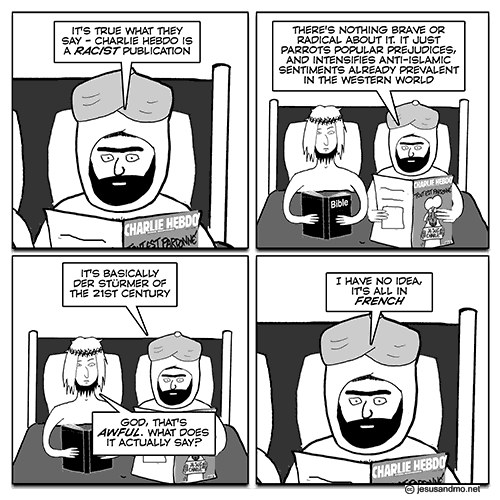
    Six days ago I received your petition protesting PEN’s decision to award Charlie Hebdo with its 2015 Toni and James C. Goodale Freedom of Expression Courage Award. I added my name to the list based on a number of factors, chief among them the fact that while I was sickened by the fatal repercussions of Hebdo’s repeated lampooning of Islam, I was also deeply troubled by the idea that a magazine that seemed to cater shamelessly to Islamophobia (in a nation that has already banned the hajib from its schools, no less) might be celebrated in any way for its work. I was also influenced by the fact that I am currently at work on a historical novel set in Nazi Germany, and found Hebdo’s visual similarities to Der Sturmer jarring, to say the least.

    Over the past week, however, I’ve found myself doing further research and considerable soul-searching, and have come to the somewhat chastening conclusion that my decision, while well-intentioned, was misinformed and (quite frankly) wrong.

    For one thing, I’ve realized that Der Sturmer was state-sanctioned hate literature in a society where free expression was banned, whereas Hebdo is a free publication deliberately and—yes—courageously celebrating its right to free expression. There is also dismay over yesterday’s shooting in Texas; as writers, should we should really be censoring ourselves on issues that now almost automatically seem to provoke violent retribution, rather than protesting that violence by persevering? (To be honest, such thinking strikes me as more in line with a National Socialist society than a Democratic one).

    But my conclusion mainly stems from the fact that at the time I signed the petition, I—like many, I now believe—fundamentally misunderstood Charlie Hebdo’s mission and content. The controversial images—while arguably tasteless, offensive and not even particularly well-drawn—sprang from satire, not hate. It is a profound and crucial difference: if one is to argue for freedom of speech there can be no caveats, no asterisks, no fine print qualifying that “freedom” only applies to expression we don’t consider too upsetting, or doesn’t enrage right-wing fundamentalists with guns. (I think it’s worth noting here that I was also under the misassumption that Hebdo disproportionately lampooned Islam. In fact, as Michael Moynihan points out in his—in my opinion excellent—piece in today’s Daily Beast , the magazine has featured significantly more anti-Christian covers (21) than anti-Islam (7) in the last decade.)

    As a writer whose work is largely predicated on diligent and careful research, I am reluctant to admit that in this case, I didn’t do enough of it before sending my name out into the Cloud. Unfortunately, though, that is the conclusion to which I’ve been forced to come, and I thought it best to acknowledge it publically and head-on rather than disingenuously pretending otherwise. I’d therefore like to remove my name from your petition, while also thanking you and the other signatories for the opportunity your letter gave me to struggle with a very central—if thorny—question that impacts all of us as writers.

    Sincerely,

    Jennifer Cody Epstein

    An excellent letter, don’t you think? If only more of the dissenters would join her! I find it hard to believe that if they actually considered the facts and arguments that have been presented, they would all continue to insist that Charlie Hebdo is racist and indefensible. Jennifer Cody Epstein told the Morgenbladet journalist that she would welcome the company.

  • One of the Charlie Hebdo dissenters did change her mind

    Whaddya know – Jesus & Mo Author alerted me to the fact that one of the Charlie Hebdo protesters actually did listen and did learn and did reverse her position. It was reported in the Norwegian weekly paper Morgenbladet.

    «Dårlig informert». – Jeg har akkurat bedt om at mitt navn tas vekk fra listen, skriver Jennifer Cody Epstein, bestselgende forfatter og oversatt til norsk to ganger.

    Også hun har endret mening.

    – Min opprinnelige impuls var basert på noen alvorlige feiloppfatninger som jeg frykter at flere andre underskrivere deler, selv om de kanskje ikke snur offentlig i en litt pinlig form, slik jeg gjør nå.

    Epstein sier at hun misforsto Charlie Hebdos oppdrag og innhold fundamentalt, og etter hvert skjønte at Charlie Hebdo var satire, ikke et forsøk på å utnytte «rasismen, islamofobien og anti-semittismen som vokser frem rundt om i verden».

    Google translate with some tweaks based on guesses:

    Translation by Harald Hanche-Olson:

    “Misinformed”. – I have just now requested the removal of my name from the list, writes Jennifer Cody Epstein, bestselling author and translated to Norwegian twice.

    She too has changed her mind.

    – My original impulse was based on some serious misunderstandings which I fear are shared by several other signers, even if they don’t turn around in public and somewhat embarrassingly, the way I am doing now.

    Epstein says that she fundamentally misunderstood Charie Hebdo’s mission and contents, and came to understand that Charie Hebdo was satire, not an attempt at exploiting “the racism, islamophobia, and anti-semitism that are growing around the world”.

    – After some investigating and soul searching, I have concluded that my opinion was based on information that was lacking and, to be quite honest, wrong – even if the intentions were good.

    So, good for her. If only more would follow suit!

  • Majority viciously attacking small numbers of dissent

    Speaking of the Charlie Hebdo protests…a few days ago Joyce Carol Oates retweeted a string of remarks by Dan Therriault, then made some of her own.

    The first:

    Dan Therriault ‏@dantherriault May 22
    With PEN dissent, I suspect more writers would have separated themselves from Hebdo content if those few who dissented were not so vilified.

    Majority viciously attacking small numbers of dissent used to stop more dissent, to threaten quiet others & maintain their majority opinion.

    This devaluing of dissent in the US bleeds into everything, the media questioning authority, political parties, attacking corporate culture.

    But it’s truly disheartening to see writers pulled along the cultural move to the right to attack fellow writers for their rational dissent.

    That’s so annoying.

    Just because it’s a minority does not mean it’s right or reasonable. Calling it dissent doesn’t make it right, or reasonable, or fair, or factually accurate.

    Disagreeing with the stupid things said by the anti-Charlie people is not the same thing as devaluing dissent. Charlie Hebdo is all about dissent!

    Again this just reflects ignorance of what Charlie Hebdo is – it’s hardly the voice of the oblivious comfortable majority!

    Defending Charlie Hebdo is not part of “the cultural move to the right.”

    Now for Oates.

    Joyce Carol Oates ‏@JoyceCarolOates May 22
    @dantherriault “Move to the right” signaled by attack of dissenters as “fellow travelers” in echo of Joseph McCarthy’s crude smears.

    PEN controversy might have been dealt with rationally–writer-friends Paul Auster & Russell Banks, for instance, wrote only private letters

    & their (opposing) positions very clearly stated; but not made public, unfortunately. & at once, name-calling, threats, etc. poisoned scene.

    It did not help that American writers/ commentators really knew little of French tradition in which Charlie Hebdo-like satire is revered.

    Isolated caricatures, presented by our media to arouse/ inflame (?) reactions, were interpreted in American terms, not French terms.

    It is said that poetry is what is left out when poems are translated & perhaps satire is not translatable either. We “see” only in context.

    None of that is any kind of reason to kill the staff of Charlie a second time.

    This whole conversation is one of those irregular verb items – we’re the rational dissenting minority, they’re the dissent-hating right-wing majority.

  • “The Muslim world was enraged”

    Ok now I’m curious enough about Rafia Zakaria to read her piece about Charlie Hebdo in Al Jazeera. It’s a relief that she does at least know how to adjust her style for a broader audience. The clarity is welcome.

    She starts by summarizing the controversy, ending with a very odd description of its core event:

    The question whether Charlie Hebdo needs to be valorized is contentious. It tragically lost eight staff members when gunmen affiliated with Al-Qaeda in Yemen stormed the magazine’s offices on Jan. 7.

    Charlie “lost” eight staff members. So I guess when the gunmen stormed the offices, Charlie just somehow misplaced eight of its people and has never been able to find them? And that’s what all this is about?

    What a weasel. Charlie didn’t “lose” any staff members. The Kouachi brothers, in masks and body armor, forced their way into the office and shot everyone they saw, killing eight people.

    She’s a cowardly weasel about saying what happened to Charlie, but she makes up for it by being assertively blunt about the nature of Charlie – blunt but untruthful. She veils the truth and puts the untruth out into the glare of noon sunlight.

    Those who are withdrawing from PEN’s gala support Charlie Hebdo’s right to publish the material, but they argue that its racist and Islamophobic content should not be endorsed with an award.

    She treats it as established fact that Charlie Hebdo has “racist and Islamophobic content” when she must be aware that that’s hotly contested.

    The magazine has a history of singling out Muslims for jabs and ridicule.

    Note the gross factual mistake, or pair of mistakes. CH doesn’t single out Muslims, and the jabs and ridicule are for the ideas and the bosses more than for “Muslims” in general.

    Its editorial staff occupies a privileged position compared with that of European Muslims or Muslims in general, whom they have long targeted with irreverent satire.

    Oh really? Muslims in general? So the staff occupies a privileged position compared with that of the rulers of Saudi Arabia for instance? Compared with that of the Saudi religious police? Compared with that of Daesh and Boko Haram? Privileged in what sense, privileged in relation to whom? In short, that’s bullshit; simplistic, self-pitying bullshit.

    Over the years, PEN has done exemplary work in supporting and speaking out for persecuted writers. However, its award to Charlie Hebdo appears counterproductive to the ideal of literary truth by elevating Islamophobic and racist content that instead deserves condemnation. Although the magazine’s editors and cartoonists were victims of terrorism, their work reflected and fed into the collective sensibility that led to the mass slaughter of Muslims as a way to fight terrorism. I support freedom of speech, and I deplore the tragedy, but their work does not deserve honors.

    Again – she’s just pretending it’s established fact that Charlie Hebdo is full of “Islamophobic and racist content” when that is at the very least contested.

    Literary organizations such as PEN have often been too silent about Western interventions in the Muslim world and the mayhem they have caused. For example, while PEN regularly champions Muslim writers persecuted by foreign governments, it has rarely done this when Muslim writers are persecuted by the U.S government or its allies under its “war on terrorism.” Such silence or tacit support of U.S. foreign policy has led to the elevation of Islamophobia as an acceptable prejudice in the West.

    She gives no examples. I would like to know what Muslim writers she has in mind.

    And then she takes a turn for the completely disgusting.

    Leading the countercharge in PEN’s defense is Rushdie. In 1988, when he published his fictional account of the life of the Prophet Muhammad, “The Satanic Verses,” the Muslim world was enraged. Iran’s Ayatollah Ruhollah Khomeini accused him of blasphemy and issued a fatwa with death threats. More than 20 years later, Rushdie still enjoys worldwide acclaim.

    Look at that. Look at it, and quail with disgust. For one thing, The Satanic Verses is not “his fictional account of the life of the Prophet Muhammad.” And then saying “the Muslim world was enraged” is completely ridiculous, and an insult to the very set of people she takes herself to be defending or justifying or speaking up for. It’s not the case that all Muslims were enraged.

    And then, worst of all, is that glib callous brutal jump from Khomeini’s murderous fatwa to her apparent resentment that Rushdie still enjoys worldwide acclaim. I guess she wishes he were reviled and long-dead?

    But it gets worse.

    He has championed Charlie Hebdo. In addition to his comments on the authors behind the PEN boycott, he continues to castigate the writers who have raised objections about the award as “being in the enemy camp” and “fellow travelers” in the cause of Islamic jihad.

    Rushdie’s accusations sound eerily similar to George W. Bush’s now famous mantra “You’re either with us or against us,” which has been a huge part of the U.S wars abroad. In March, on the 12th anniversary of the start of the Iraq War, a report revealed that the conservatively estimated human cost of Washington’s military campaigns in Iraq, Afghanistan and Pakistan to stand at 1.3 million people.

    Yes really. She’s linking Rushdie to Bush (hey, even the names are similar) and thence to the body count of Bush’s war and the Islamist murder-campaigns. Really.

    (Yes, Bush’s war created the vacuum that made the Islamist murder-campaigns possible. I’m not defending Bush’s stinking war.)

    Questions about privilege and Islamophobia have been difficult to discuss in the U.S. literary sphere, not least because of the lack of diversity in this realm and the politics of the “war on terrorism.” While U.S. military interventions have altered the global view of Muslims for the worse, organizations such as PEN have remained silent. In this context, valorizing Charlie Hebdo’s pillorying of Muslims ignores the 1.3 million mostly Muslim casualties of U.S. operations in Iraq, Afghanistan and Pakistan. Making jokes about Muslims and their identity in the aftermath of Washington’s wars serves only to reinforce the war’s propaganda.

    What she seems to be doing here is conceptualizing Islam as just “Muslims” – and “Muslims” as all subalterns, parishioners, members, audience – ignoring imams and scholars, religious police and Islamist organizations, monarchs and dictators, madrassas and sharia courts. She is, in short, eliding the very existence of power relations within Islam, and of the millions of Muslims who are subject to theocratic power with no way of modifying or appealing it. What about the “identity” of the judge who sentenced Raif Badawi? What about the “identity” of the machete-wielders who murdered Avijit Roy and Washiqur Rahman? What about the “identity” of the heavily armed men who have enslaved thousands of Nigerian women and girls?

    She doesn’t say.

  • A sneer too many

    There’s another one. This article is much longer, and more “sophisticated” in what I think is a rather bogus way. What Rafia Zakaria says isn’t all wrong, by any means, but it’s…I don’t know what to call it. Academic, perhaps. Too sophisticated by half. Unfeeling. And, in places, just nasty.

    My subject today is after all a philosophical one, dealing with my opposition to the PEN American Center’s decision to honor the French magazine Charlie Hebdo with the 2015 Freedom of Expression Courage Award. The star-studded gala, tickets to which cost more than a thousand dollars a person, took place on Tuesday evening, May 5, 2015. Thunderous standing ovations were given to the recipients. The fact that six writers and then eventually 145 others had objected to the granting of the award to a magazine that publishes Islamophobic content whetted the self-regard of the attendees. Their puffed presence at the gala stood for more than just literary renown or monetary privilege; it was a moral victory. It was they who really stood for freedom of speech, were truly sincere in their opposition to murder.

    You’ll see what I mean, I think. The cold sneer is out of place. These were left-wing journalists discussing an anti-racism campaign in a shabby newspaper office; they were not her enemies. The two men who murdered them were not her friends. Her cold sneer is a sneer too many.

    I believe the omission of the subjective and the sidelining of moral injury to Muslims as a result of Hebdo’s depictions of the Prophet reveal a double standard when set against examples of liberal moral outrage at certain practices found in the non-Western world. Judgment often exists at the intersection of reason and moral aversion; similar constructions by Western liberal theorists are permitted this hybrid, but not Muslims. Second, I believe that the application of this double standard and the valorization of Hebdo suggest an internationalization of the idea that freedom of expression is rooted in Western Enlightenment, and that all Muslims are opposed to the idea. Ironically, only Muslim extremists believe that Muslim authenticity lies in opposition to all that is Western.

    Well I think it’s the opposite of that. I think the “valorization” of Hebdo suggests the belief that freedom of expression is a universal right and that far from all Muslims are opposed to the idea.

    But I can’t do the whole thing. It’s too turgid, too long, too diffuse, too academic…much much too “sophisticated.”

  • Instead of listening to the minimally informed voice in your head

    There’s one compensation in all the stupid treacherous bullshit about Charlie Hebdo, and that is the discovery of new best friends. Mihir S Sharma is my new best friend for this morning. He has thoughts on The vanity of good souls:

    I have already stated, in this column, my reasons for thinking that the highest duty of any writer – or indeed human being – is to refuse to ignore oppression and silencing, even if that silencing is ostensibly on behalf of a marginalised community. Without allies from outside, it is difficult for any stomped-on member of a community to escape. And the focus on that individual, instead of the community to which they are forced to belong by birth, is central to every progressive and humane development in the centuries since writers in France and Scotland created the Enlightenment out of little more than hope and anger. Everywhere the values of the Enlightenment are threatened, mocked and diluted – in our country not least. If you believe the values of the Enlightenment, which stress our common humanity and shared – but not communal – rights, are necessarily racist, European, or discriminatory, then naturally you will disagree with me. You are grievously and tragically wrong, but I cannot set you right in the 500 words remaining in this column.

    Members of communities must always be able to escape. A community that locks all the doors is a bad community. A community has to be fully voluntary to be worth belonging to it. It’s much the same principle as that which says marriage should be chosen and not forced – what on earth can be the point of a form of “affection” or “loyalty” that is compelled?

    I suppose an exception to that is the military, but then the military is an organization and an institution more than a community. The very word “community” is used to avoid the implications of force and institutionalization; communities are supposed to be cuddly and loving…which becomes a mockery when they are in fact coercive and harsh.

    But what I can do is point out how, when it comes to honouring writers, the principle matters – but so does the text. I agree with the New York Six that even if you stand for free speech, you could still say that awarding racists is not necessary. You can defend them, protect them, march in their support. But you need not honour them. In matters of honour, the principle does not trump the example.

    But the New York Six violate this, too. For they have indeed put a principle above the instance. The principle is anti-colonialism; and the instance is Charlie Hebdo, the anti-authoritarians. The Six have chosen to ignore a long history of provocation in order to focus on what they see as “selectively offensive material”.

    Then he points out the facts. Charlie Hebdo is not lily-white, nor is it obsessed with Islam.

    Third, French Muslims are not clinging to religion in the face of an oppressive state. Whatever their economic marginalisation, they are, in fact, the most rapidly secularising Muslim community in the world. According to one estimate, quoted by a Pew Survey, “the fraction of Muslims actively practicing their religion in France is only 10 per cent, which is very similar to that of practicing Catholics”. Eight of 10 French Muslims say they “want to adopt French customs”. Only as many French Muslims say they are French before being Muslim as American Christians say they are Christian before American. In other words, the New York Six have caricatured and patronised French Muslims, in a way Charlie Hebdo never did.

    As we just saw that Jon Wiener did in the Nation, guessing at what French Muslims “must” feel about Charlie’s Mo cartoons.

    Fourth, it would be wise to listen to the voices of France itself. Just because it is a Western country does not mean that the smug Anglo-American pretend-liberal can immediately understand it. Instead of listening to the minimally informed voice in your head, look instead to the anti-racism movement in France – and to men such as Dominique Sopo, the young president of the organisation SOS Racisme, who turned up to defend Charlie Hebdo at the PEN gala earlier this week. It was, he said, “the most anti-racist newspaper” in France … Every week in Charlie Hebdo – every week – half of it was against racism, against anti-Semitism, against anti-Muslim hatred.” The magazine’s murdered editor, Charb, was about to publish a book attacking Muslim-hatred. (Read it, it’s awesome.) In fact, as Michael Moynihan pointed out on The Daily Beast, “when the shooting began, the Charlie Hebdo staff members were discussing their participation in an upcoming anti-racism conference”.

    To choose to call these people racist, in the service of a half-formed anti-imperialist principle, shows the worst kind of Anglo-American arrogance.

    The kind that already had a bad name from the early days of the fatwa, and is now even worse.

    Political differences aside, this is what I say to the Six Authors in Search of Character: If you wish to slander the dead, it is your right. But you are a fool to do so. And far worse, you are unkind.

    Let the final word go to Charlie Hebdo itself. On its latest cover, it gleefully makes the obvious pun – linking PEN, the organisation, to Le Pen, the racist family that runs the magazine’s favourite target, the National Front. Inside, Pierre Lancon – shot in the face in January – writes sadly of the New York Six: “It’s not their abstention that shocks me. It’s the nature of their arguments. That novelists of such quality … come to say so many misinformed stupidities in so few words, with all the vanity of good souls, is what saddens the reader in me.”

    In me too also.

  • He doubts, he imagines

    More provincial ignorant backstabbing from people on the left, this time Jon Wiener in the Nation replying to Katha Pollitt.

    The headline is terrible, for a start.

    Defend Charlie Hebdo’s Publishing Disgusting Cartoons About Muslims? Yes. Give Them an Award for It? No.

    That’s probably an editor, because Wiener said “about Islam,” not Muslims. Bad editor. Bad headline.

    It’s a simple distinction, but somehow it’s been overlooked by a lot of those who support the decision by PEN to give its “Freedom of Expression” award to Charlie Hebdo. Those who signed the protest against the award (I was one of them) agree that Charlie Hebdo had a right to publish cartoons about Islam, no matter how disgusting, and not be killed for doing it. The question is whether Charlie Hebdo should be given an award for publishing them.

    I don’t think people did overlook that distinction. I think we understood that was what the anti-Charlie people were saying, and disagreed with them.

    The issue is the cartoons. We are told we don’t understand them; Katha says they are really “indictments of the racist and anti-immigrant views of right-wing French politicians.” Others have said the cartoons “speak truth to power.”…

    The Charlie Hebdo cartoons, Katha says, are really “the opposite of what they seem to American readers”; you have to be “immersed in French cartoon culture” to understand them. Maybe so—I’m certainly not.

    So then maybe he should pay attention to people who are? Maybe he should stop trusting his gut reactions and listen to people who are immersed in French cartoon culture? Maybe he should grasp that the gut reactions of Americans who know nothing of French cartoon culture are not particularly useful or interesting?

    No, apparently not, because he goes right ahead and insists on his own admittedly uninformed hunches.

    Garry Trudeau and others criticized Charlie Hebdo for ridiculing the weak and the powerless in France today. In response, Katha argues that the cartoons in fact mock the powerful—fundamentalist Muslim authorities who oppress women. But take a look at those cartoons again; they’re not about defending Muslim women from fundamentalist imams; they are about “Mohammed” inviting anal sex. I doubt that secular or moderate French Muslim women would see these cartoons as representing their views or defending their position; I imagine it would have the opposite effect and draw them back into the fold to defend Islam.

    So he apparently doesn’t even know enough about this to remember Zineb El Rhazoui. He thinks he gets to judge the cartoons without knowing anything about their context, and then surmise how “secular or moderate French Muslim women would see these cartoons” and then stab Charlie in the back based on that wild surmise.

    And yes it’s true that Charlie Hebdo also ridiculed Christianity and Judaism. But they are not getting an award for ridiculing Christians—and PEN would never give them an award for having the courage to ridicule Jews.

    Oh, maybe he did write that headline himself after all, given how easily and apparently unconsciously he shifts from ridiculing Christianity and Judaism to ridiculing Christians and Jews.

    The left has to be able to think better than this.

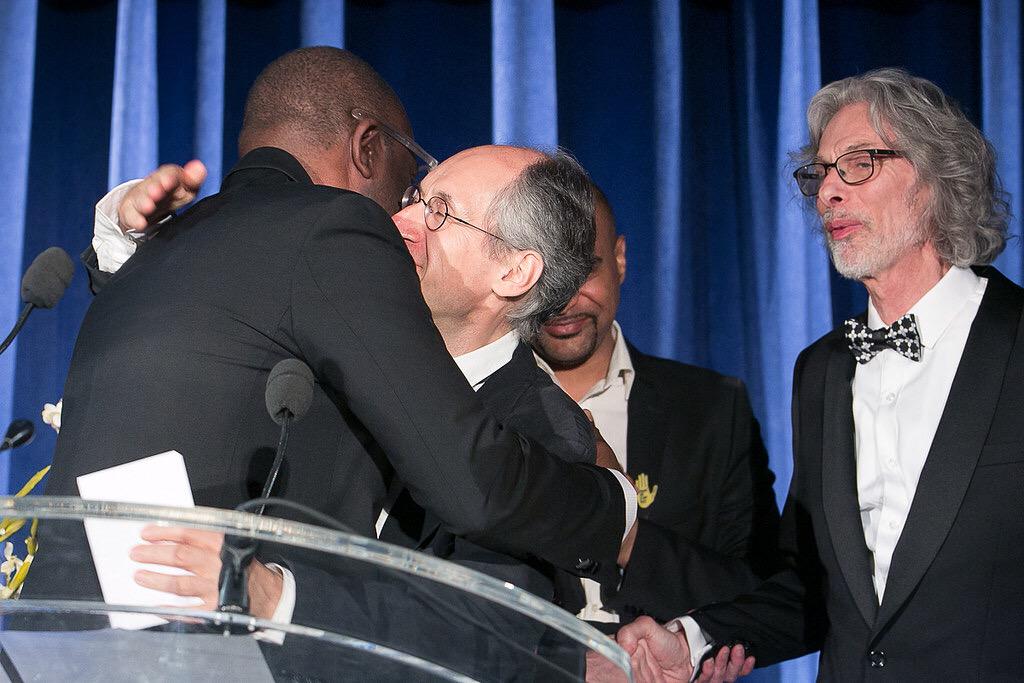
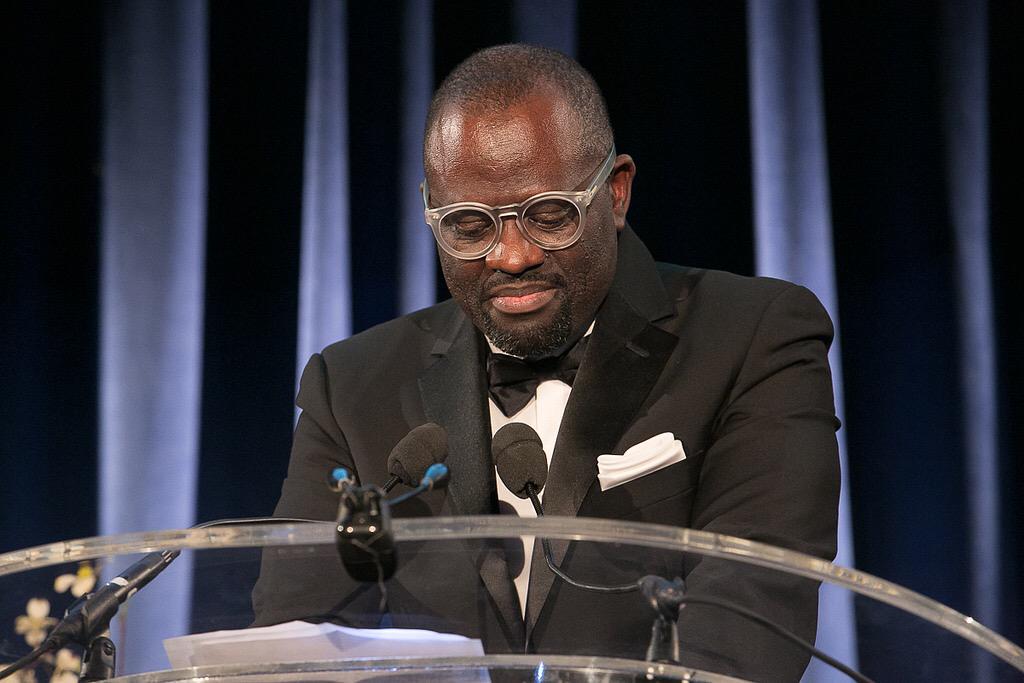
  • Une fois de plus, bravo à #CharlieHebdo

    Some more beautiful snaps from the PEN gala when Charlie accepted the award, via Alain Mabanckou on Twitter.

    Alain Mabanckou @amabanckou · May 6
    Une fois de plus, bravo à #CharlieHebdo : j’ai eu grand plaisir à présenter le prix Courage reçu à #NYC au #PENgala

    [One more time, bravo to Charlie Hedo: I had the great pleasure of presenting the Courage prize, received in NYC at the #PENgala]

    Embedded image permalink