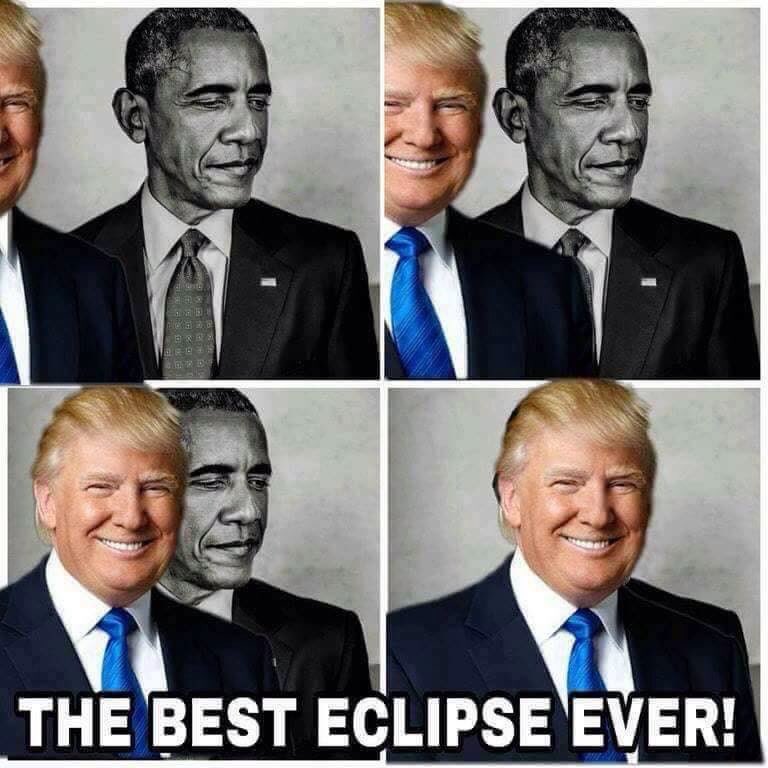
Tag: Trump

  • More grenade launchers for the cops

    Another step on the road to fascism.

    The Trump administration plans to reinstate in full a program that provides local police departments with military surplus equipment such as large-caliber weapons and grenade launchers, according to a document obtained by The New York Times.

    Sure. Why would we not want a completely militarized police force? We have no history at all of cops abusing their power, so why not trust them with tanks, missiles, machine guns?

    Attorney General Jeff Sessions is expected to announce the changes to the program on Monday when he speaks at a Fraternal Order of Police conference in Nashville. It was not immediately clear why Mr. Sessions would announce changes to a Pentagon program, but he has rolled back several Obama-era policing reforms and helped bolster the Trump administration’s support among law enforcement.

    President Barack Obama put limits on the program in 2015, when several high-profile cases of police officers killing black men inflamed tensions between law enforcement and local communities.

    The Times is coy because it’s the Times, but I don’t have to be coy. Of course it’s clear why Sessions would do this: he’s a thoroughgoing racist and always has been, and he wants to make the police even more terrifying to those Other races than they already are. Sessions, like Trump, loves force and violence and Authority, and wants to strengthen it at the expense of the citizenry.

    The shooting death of 18-year-old Michael Brown in Ferguson, Mo., in 2014 by a white police officer triggered protests and a heavily armed police response that many in the community saw as unnecessary. Images of the police with sniper rifles on top of armored cars or wearing riot gear to watch over protests set off a debate about whether police departments had lost sight of their missions to serve and protect.

    “We’ve seen how militarized gear can sometimes give people a feeling like they’re an occupying force,” Mr. Obama said in announcing that he was placing curbs on the program.

    But for Trump and Sessions that’s a feature, not a bug, and they want more of it not less.

    Mr. Obama prohibited transfers of weaponized vehicles, certain large-caliber ammunition and other equipment. He also added restrictions on transferring some weapons and devices, explosives, battering rams, riot helmets and shields.

    Mr. Trump plans to sign an executive order to reverse those limits, a “policy shift toward ensuring officers have the tools they need to reduce crime and keep their communities safe,” according to the document, which described the president’s coming order and the rationale behind it.

    It cited two academicarticles that said the program helped reduce crime and did not lead to an increase in police-involved deaths. It also said that a military-style helmet saved the life of an officer who responded to the 2016 shooting that killed 49 people at the Pulse nightclub in Orlando.

    And it called much of the equipment provided through the program “entirely defensive in nature,” a characterization certain to draw the ire of those opposed to the police deploying certain heavy weapons and vehicles in tense but not clearly dangerous situations.

    Remember, kids: when in doubt, shoot.

  • No excuse for not realizing what kind of man he was

    Krugman calls it fascism.

    Mind you he seems to think it requires some justification, while I think it’s obvious, but then he’s writing in the Times and I’m not.

    Let’s call things by their proper names here. Arpaio is, of course, a white supremacist. But he’s more than that. There’s a word for political regimes that round up members of minority groups and send them to concentration camps, while rejecting the rule of law: What Arpaio brought to Maricopa, and what the president of the United States has just endorsed, was fascism, American style.

    And fascism goes in stages; it’s not the full-blown thing from day one. Trump is getting steadily more horrific. That’s how this goes.

    Maybe we’ll manage to stop him before he rounds us all up and puts us in camps, but we can hardly be complacent about it.

    What makes it possible for someone like Trump to attain power and hold it is the acquiescence of people, both voters and politicians, who aren’t white supremacists, who sort-of kind-of believe in the rule of law, but are willing to go along with racists and lawbreakers if it seems to serve their interests.

    There have been endless reports about the low-education white voters who went overwhelmingly for Trump last November. But he wouldn’t have made it over the top without millions of votes from well-educated Republicans who — despite the media’s orgy of false equivalence or worse (emails!) — had no excuse for not realizing what kind of man he was. For whatever reason, be it political tribalism or the desire for lower taxes, they voted for him anyway.

    And more of the rich well-educated class voted for Trump than voted for Clinton, so it’s not the case that it was mostly angry white proletarians.

    We may well be in the early stages of a constitutional crisis. Does anyone consider it unthinkable that Trump will fire Robert Mueller, and try to shut down investigations into his personal and political links to Russia? Does anyone have confidence that Republicans in Congress will do anything more than express mild disagreement with his actions if he does?

    As I said, there’s a word for people who round up members of ethnic minorities and send them to concentration camps, or praise such actions. There’s also a word for people who, out of cowardice or self-interest, go along with such abuses: collaborators. How many such collaborators will there be? I’m afraid we’ll soon find out.

    The struggle continues.

  • Trump finds Inspirational Quotes

    Trump this morning. No tweets of his own yet, but he pointedly retweeted these three items.

    DSouza was retweeting the Post:

    Geddit? It’s not the far-right, it’s not white supremacists, it’s THE LEFT, just as he said at that press conference. There are no white racists, there are only Very Fine People; the bad people are all on the left.

    Next.

    Pavlich was retweeting Ben Rhodes:

    And then he finished it off with a pious deepity from the reactionary nun.

    https://twitter.com/Inspire_Us/status/901809050161164288

  • They felt secure in their support

    A few days ago the UN condemned Trump’s racist outbursts since Charlottesville.

    Without mentioning Mr. Trump by name, a body of United Nations experts on Wednesday denounced “the failure at the highest political level of the United States of America to unequivocally reject and condemn” racist violence, saying it was “deeply concerned by the example this failure could set for the rest of the world.”

    Mr. Trump’s wavering responses to the violence — he has blamed “many sides,” but also singled out the Ku Klux Klan, neo-Nazi groups and white supremacists for condemnation — has roiled his administration, but also unsettled rights advocates around the world.

    “We were shocked and horrified by what happened,” the committee’s chairwoman, Anastasia Crickley, said in an interview, expressing disgust at the televised images of white supremacists’ torchlit parade through Charlottesville. “I was horrified as well by the way leaders of that movement were able to state afterwards that they felt secure in their support.”

    In a two-page decision that was dated Aug. 18 but released on Wednesday, a day after Washington was informed, the United Nations Committee on the Elimination of Racial Discrimination invoked “early action and urgent warning procedures” in deploring the violence and urging the United States to investigate.

    The urgent-warning procedure allows the committee to draw attention to situations that could “spiral into terrible events” and require immediate action, Ms. Crickley said.

    A proud moment for the US, isn’t it?

    Today on Fox News Chris Wallace asked Tillerson about the UN statement.

    Asked by the host, Chris Wallace, about a United Nations statement condemning the president’s words, Mr. Tillerson said that “I don’t believe anyone doubts the American people’s values” or the government’s commitment to them.

    Mr. Wallace then inquired about Mr. Trump’s own values.

    Tillerson’s reply: “The president speaks for himself.”

    After Mr. Tillerson’s pointed response, Mr. Wallace asked whether he was separating himself from the president on the issue.

    Mr. Tillerson answered: “I have spoken. I have made my own comments as to our values as well in a speech I gave to the State Department this past week.”

    He’s still got Roger Stone.

  • He sat in a red fire truck, too

    Elizabeth Williamson at the Times on Pres-i-dent Trump and the babysitters.

    The epigraph:

    “You treat me like a baby! Am I like a baby to you? I sit there like a little baby and watch TV and you talk to me?”

    — Donald Trump to Paul Manafort in “Devil’s Bargain,” by Joshua Green.

    Why yes, Don, of course you’re a baby to us. You act like a baby. You talk like a baby, you have no idea how to think, just as a baby does.

    He lives in the White House, where he gets two scoops of ice cream instead of one for dessert. He is commander in chief, eating “the most beautiful piece of chocolate cake” with the Chinese president while he fires missiles at Syria. As he told the Russians, “people brief me on great intel every day,” with lots of pictures and “tweet-length sentences.” He has a “beautiful Twitter account.” Uh-oh!

    Mr. Trump’s staff can’t control him, so they coddle him. They make sure he starts his day with a packet of good news about himself, compiled by Republicans who get up early to search for positive stories, headlines, tweets or, failing those, flattering photos.

    It’s a full-time job for one of his aides, who makes a very nice salary for doing it.

    Mr. Trump likes “unstructured time” to watch TV. His favorite station is Fox News Channel but he’ll watch any show where they talk about him. If they say something bad about him, he tweets. That makes everyone nervous. His staffers try to limit his screen time during the day and keep him from “calling old friends and then tweeting about it.” But then it’s off to bed with his phone, and “once he goes upstairs, there’s no managing him.” Uh-oh!

    Image result for teletubbies

    Trump says the job is hard. People yell at him. He gets cranky.

    He screams at the television, at staffers, and at Republican legislators, demanding that somebody make it stop. But when Mr. Trump’s advisers tell him what he might do, he likes doing the opposite — like when he fired James Comey, the director of the F.B.I., or stared at the solar eclipse. After he blurted out secrets to Russian officials in the Oval Office, his team worried about “leaving him alone in meetings with foreign leaders.” H. R. McMaster, the national security adviser, tries to correct the president and keep him out of trouble. The president calls General McMaster “a pain.”

    When Mr. Trump has one of those “moods where sometimes he wants to blow everything up,” his staff takes him outside. He sat in an 18-wheeler in the White House driveway one time. “Honk, honk!” went the horn. He sat in a red fire truck, too. “Where’s the fire?” Mr. Trump asked Vice President Mike Pence. “Put it out fast!” Mr. Trump went to Saudi Arabia, where they gave him steak and ketchup and put his photo on the side of a building. But most of all Mr. Trump likes when his staff plans field trips to rallies in red states, where he can campaign for president again.

    But even that nice military General Kelly can’t control Trump himself. Uh-oh!

  • Why Arpaio matters

    James Fallows on why the pardon of Arpaio is so bad.

    [The] main difference was the nature of Arpaio’s crime. While he is not the first official whose offense involved abuse of public powers—from Nixon on down, others fit that category—his is the first case I’m aware of where someone is pardoned for using state power toward racist ends.

    That description of Arpaio’s crime may sound tendentious, but it’s what his conviction amounts to. For details, I very highly recommend a Twitter chronicle put out last night by Phoenix New Times, which has been covering Arpaio for two decades. Over at least the past decade, state and federal judges—most of the latter appointed by George W. Bush—have been criticizing Arpaio and his practices, and warning that they violate a range of anti-discrimination laws. In 2008, one Bush-appointed federal judge, Neil Wake, ruled in favor of the ACLU, which had claimed that Arpaio’s jailing practices were unconstitutional and abusive. Another Bush appointee, federal judge G. Murray Snow, ordered Arpaio to cease-and-desist racial profiling practices, and referred him for criminal prosecution when he refused to obey. In the Phoenix New Times account you’ll see links to a lot more.

    This was Arpaio’s practice. It’s among the reasons that the voters of Maricopa County turned him out by more than a 12-point margin last fall, in the same election where they voted for Donald Trump by a margin of four points. And it is what Donald Trump has called “just doing his job” and has pardoned Arpaio for.

    * * *

    The pardon is damaging for both immediate and longer-term reasons. The immediate significance is that the United States is in the middle of disputes for which Joe Arpaio is a precise and destructive symbol. Across the country, police units are under scrutiny, or are avoiding it, for their use of deadly force on civilians, and the fairness with which they use it on white- and non-white subjects. Across the country, Latino groups in particular are on the alert for raids and excesses by newly energized local law-enforcement agencies and federal immigration officials. At just this moment, Donald Trump has chosen to pardon a man convicted of violations on both fronts: The units he commanded were needlessly violent and abusive toward civilians, and they based too many of their decisions about the use of force on the subject’s race.

    Of course that also serves to explain why Trump did it – it’s not just that Arpaio’s his buddy-in-racism and he wanted to help him because he’s such a fantastic guy – it’s also because Arpaio’s his buddy in racism, and he loves that. He pardoned him not despite the racism but very much because of it.

    The longer-lasting problem is that the nation is wrestling once again with its founding injustice: the unequal application of of state power, on differential racial grounds. That was the essential logic of slavery, and after it of Jim Crow and legalized segregation. Joe Arpaio is a symbol of using state power to maintain racial advantages and disadvantages. If you think this is overstated, please read the New Times account and the many references it links to, or this report on Judge Snow’s findings.

    I don’t think it’s overstated. I wish I could; I wish I had reason to. I wish this were not happening.

    And at this moment, in these circumstances, this is the man Donald Trump has chosen to praise, and to protect. The symbolism is exactly as clear as if Lyndon Johnson had gone out of his way in the 1960s to pardon Southern sheriffs or mayors who were intimidating civil-rights protestors. But of course Lyndon Johnson didn’t do that.

    He did the other thing.

  • Goes to intent

    Business Insider argues that Trump’s pardon of Arpaio, coupled with his asking Sessions months ago if he could get the case dropped, undercuts the claim by Trump allies that he didn’t actually order Comey to drop the Flynn investigation, he merely expressed a hope.

    When Trump allegedly asked Sessions this past spring whether it would be possible to drop the federal criminal investigation into Arpaio, Sessions told Trump such a move would be inappropriate, but that Trump could pardon Arpaio if he was convicted, The Post reported, citing three people familiar with the conversation.

    Trump ultimately granted the pardon on Friday evening, sparking fierce backlash from liberals and some conservatives.

    But some legal analysts also pointed out that Trump’s decision to pardon Arpaio, and the actions he took preceding that, may serve as an important piece of evidence to special counsel Robert Mueller, who is reportedly investigating the president for obstruction of justice.

    It has to do with his intent in that February conversation with Comey.

    According to Comey’s testimony before the Senate Intelligence Committee in June, Trump privately told Comey, who was spearheading the FBI’s Russia probe at the time, he “hoped” Comey would “let this go,” referring to the investigation.

    Several Trump allies and Republican lawmakers have since grasped those words and said they do not prove Trump tried to obstruct justice by asking Comey to drop the investigation and subsequently firing him.

    They resorted to the hyper-literal Nice Little Place defense: saying “nice little place you got here, would be a shame if it burned down” is just an observation like “rainy today isn’t it.” Senator Jim Risch of Idaho did a little dance with Comey, insisting that Trump never issued an order of the form “drop the investigation into Flynn.” Right, and by the same token, a man inviting a woman to his hotel room for coffee at 4 a.m. is absolutely not a lightly veiled sexual overture, it’s all about the caffeine.

    When Comey said that despite Trump’s words, he took it as a direction from the president of the United States, Risch said, “You may have taken it as a direction, but that’s not what he said.”

    The main thing Mueller — who was put in charge of the Russia investigation after Trump fired Comey — would need to prove in an obstruction of justice case is whether Trump acted with corrupt, or unlawful, intent when he asked the FBI director to drop the Flynn investigation.

    “[Trump’s] defense would be that he thought it was appropriate to end the Flynn investigation because it was meritless and that there was nothing wrong with him, as president, making that determination,” Mariotti told Business Insider.

    But the president’s decision to pardon Arpaio demonstrates that “this has become a pattern of activity where he tries to end investigations of his friends,” he added. “Everything he said, did, and was told as to Arpaio is relevant to help us understand what he was thinking when he tried to end the Flynn investigation.”

    He was barely in the door when he started trying to end investigations of his friends.

    It’s a tall order when most of your friends are corrupt in one way or another, but Trump enjoys a challenge. Well not a challenge exactly, but an opportunity to bully. That’s what Trump really enjoys. He likes to be in a position of power so that he can tell others “You’re fired” or “You’re pardoned” according to his own tastes and whims.

  • Sadist bros

    It makes sense that Trump’s friendship with Arpaio goes back to their days as Birther Buddies. Of course it does. They bonded over malevolent destructive racism, Arpaio got busted for malevolent destructive racism, Trump pardoned him because he’s a fan of malevolent destructive racism.

    They’re also both sadists who go out of their way to humiliate and harm people they dislike. Naturally they’re besties.

    As Joseph Arpaio’s federal case headed toward trial this past spring, President Trump wanted to act to help the former Arizona county sheriff who had become a campaign-trail companion and a partner in their crusade against illegal immigration.

    The president asked Attorney General Jeff Sessions whether it would be possible for the government to drop the criminal case against Arpaio, but was advised that would be inappropriate, according to three people with knowledge of the conversation.

    “Oh, gee, no, Mr President, we can’t actually drop criminal cases just because the defendant is our beloved racist buddy. There are some rules and even you have to obey them. I know that seems kind of weird but it’s true.”

    So the president waited, all the while planning to issue a pardon if Arpaio was found in contempt of court for defying a federal judge’s order to stop detaining people merely because he suspected them of being undocumented immigrants. Trump was, in the words of one associate, “gung-ho about it.”

    “We knew the president wanted to do this for some time now and had worked to prepare for whenever the moment may come,” said one White House official who spoke on the condition of anonymity because of the sensitivity of the action.

    Because Arpaio is such an awesome guy, making prisoners wear pink jump suits and live in uninsulated tents in the Arizona desert in summer. What president wouldn’t want to pardon a standup guy like that?

    Trump’s decision to issue his first pardon Friday evening for Arpaio was the culmination of a five-year political friendship with roots in the “birther” movement to undermine President Barack Obama.

    That’s putting it a tad politely. Their friendship’s roots were in the movement to peddle gross lies about Obama in order to do him harm because he’s not white enough for their taste. This toad squatting in the Oval Office got his start in politics telling racist lies and he’s been doing it ever since. The head of state in this country is a lying sadistic racist monster who just spat on the rule of law for the sake of another lying sadistic racist monster. We’re all living in a reeking sewer.

    Trump’s pardon, issued without consulting the Justice Department, raised a storm of protest over the weekend, including from some fellow Republicans, and threatens to become a stain on this president’s legacy. His effort to see if the case could be dropped showed a troubling disregard for the traditional wall between the White House and the Justice Department, and taken together with similar actions could undermine respect for the rule of law, experts said.

    He’s been disrespecting the law since the day he was inaugurated.

    Trump’s spring inquiry about intervening in Arpaio’s case is consistent with his attempt to interfere with the federal investigation of Michael Flynn, the former national security adviser. Trump also made separate appeals in March to Director of National Intelligence Daniel Coats and National Security Agency Director Michael S. Rogers to publicly deny the existence of any evidence of collusion between the Russians and the Trump campaign during the 2016 election.

    Trump’s pardon of Arpaio “was his backhand way of doing what he wanted to do at the front end,” said Robert Bauer, a former White House counsel in the Obama administration. “He just wanted to kill the prosecution off. He couldn’t do it the one way, so he ended up doing it the other way. This is just another vivid demonstration of how far removed from an appropriate exercise of the pardon power this was.”

    Presidents can set law enforcement priorities, but they are expected to steer clear of involvement in specific cases to avoid the perception of politicizing the impartial administration of justice.

    Trump backed off the Arpaio case after being advised it would be inappropriate, but that he even tried is “beyond the pale,” said Chiraag Bains, a former senior counsel in the Justice Department’s Civil Rights Division.

    Bains said he believes Trump “has a sense that the chief executive controls everything in the executive branch, including the exercise of criminal power. And that is just not the way the system is set up.”​

    He thinks he’s a dictator, and no one is preventing him from acting like one.

  • Trump does not have the requisite respect for the rule of law

    Bob Bauer, who was a White House Counsel to Obama, wrote a Lawfare post Thursday about a then-potential pardon for Arpaio.

    Any president considering a pardon in the normal course would solicit and make publicly available the recommendation of the Department of Justice. The Department, however—and here we are speaking specifically of Trump’s Department—secured the very conviction for criminal contempt that would be the subject of the pardon. Now, a president can ignore the departmental recommendation: The power is his, of course, and not the Attorney General’s.  But presidents are sensitive to the Department’s recommendations, and for good reason.  The pardon power sits uneasily with the belief that ours is “a government of laws, not of men,” and the DOJ’s participation is one check on the abuse of this extraordinary authority. In answering the call for public accountability President Trump would have every incentive to involve and obtain the support of the Department. His failure to do so, or his proceeding over the Department’s objections, would ring a loud alarm.

    What’s that deafening noise I hear?

    The White House Counsel preparing the pardon papers would also need to labor hard, and would inevitably fail, to to bring this potential grant within the accepted norms for the grant of pardons. Among the more conventional considerations: the case is fresh, and with Arpaio’s lawyers readying the appeal of a decision issued in July, the president would be intervening in the middle of a legal proceeding yet to run its course. If Trump just jumps in and by executive fiat ends the matter, a pardon will have every appearance of being direct interference in the administration of justice. In his capacity as the Chief Executive, the President has already had exceptional difficulty grasping and respecting the independent and impartial operation of federal law enforcement.  With this act, Mr. Trump dramatically escalates the assault on these limits.

    He likes doing that. He thinks it’s cute.

    Then there is the large and more basic question of the purpose behind a grant. It does make a difference why a president grants a pardon. It is an act for which he or she is accountable under the Constitution: As Justice Holmes stated almost a century ago in Biddle v. Perovich, the pardon power is “part of the constitutional scheme,” to be exercised in the advancement of the “public welfare.” Or as Alexander Hamilton argued it in Federalist No, 74, it is a “benign prerogative” in the interests of the “tranquility of the commonwealth.” Like all of a president’s actions, its use is subject to the overall commitments entailed in his oath of office.

    I’m not clear on what that means, or what “accountable under the Constitution” means. I’ve seen other lawyers say the pardon power is absolute. If it’s absolute it can’t be subject to the overall commitments entailed in his oath of office or accountable under the Constitution. Maybe lawyers aren’t entirely clear on it either, because nobody has used it in such a defiant way before. (Although surely Ford’s pardon of Nixon must be a rival. I never did understand that.)

    Hamilton assured his Federalist readers that the individual occupying the Office of the President could be trusted to act on this extraordinary authority with a “sense of responsibility” marked by “scrupulousness and caution,” “prudence and good sense,” and “circumspection.”

    Good god, whatever gave him that idea?

    When Trump asked, “Do people in this room like Sheriff Joe,” he was quite explicit about the very defined political audience for the pardon—the “people in this room.”  He paid little heed to the seriousness of the matter in declaring that Sheriff Joe was “convicted for doing his job.” That, of course, was not the reason that Arpaio was convicted, and it is beneath the dignity of the country’s Chief Executive to yet again demean and ridicule a court in this fashion.

    Very nearly everything Trump does is beneath the dignity of the country’s Chief Executive. He might as well be wearing a clown suit 24/7.

    If the President does pardon Arpaio, he may do so in the belief that it will be all political gain and no cost. He will be wrong. An act of this kind cannot fail to affect Mueller and his team as they investigate obstruction of justice and evaluate evidence bearing on the President’s motives and respect for law. Trump will have added more telling detail to the picture prosecutors are piecing together of “how he operates.”. Congress may now or in the future also have occasion to conduct its own inquiry.

    And while the president may well get away with the specific act of pardoning Arpaio, this action will not be without effect on future calls for impeachment. Unlike a pardon of himself, family members, or aides in the Russia matter,  pardoning Arpaio would probably not result in the immediate demand for an impeachment inquiry. If, however, impeachment pressure increases, or a formal impeachment inquiry is launched on the basis of Russian “collusion,” obstruction, or on other grounds, an Arpaio pardon in the background will be highly damaging to the President’s position. It will immeasurably strengthen the hand of those arguing that Donald Trump does not have the requisite respect for the rule of law, or an understanding of the meaning of his constitutional oath, to be entrusted with the presidency.

    I hope so. I hope the outcome will be that, as opposed to a lawless authoritarian immovably in power.

  • A government not of laws but of toxic narcissists

    A scholar of political institutions says how Trump’s pardon deviates from other presidential pardons.

    It is hard to gauge the political fallout of the president’s decision — announced as it was late on a Friday night during an impending hurricane. Normally, though, as political scientist Jeffrey Crouch’s book on the pardon power makes clear, pardons are granted for two reasons: either to provide mercy or correct a miscarriage of justice, in an individual case; or on more general grounds based on public policy.

    Trump’s doesn’t fit the mercy category very well, because of its haste and because of the lack of contrition.

    (Further, in considering such petitions, “The extent to which a petitioner has accepted responsibility for his or her criminal conduct and made restitution to its victims are important considerations.”)

    Yeah that’s not Arpaio. He’d do it again if he could.

    Pardons also serve as a check against the judicial branch, when the president feels a grave miscarriage of justice has occurred. At his Phoenix rally, Trump seemed to make this claim, saying that “Sheriff Joe was convicted for doing his job.”

    The problem with that, though, is that Arpaio was convicted for doing the opposite of his job. As a sworn officer of law enforcement, he violated the law and then ignored court orders designed to bring his policies in line with statutory and constitutional mandates.

    This is an important point. His job is to enforce the law, and he himself flipped the bird at the law.

    Two different federal judges found, respectively, that the “constitutional violations” committed by Arpaio’s office were “broad in scope, involve its highest ranking command staff, and flow into its management of internal affairs investigations” and that he “willfully violated” directives to correct those violations.

    That in turn circles back to the public policy rationale for pardons. Presidents have given clemency to both individuals and groups, arguing that doing so serves the broader public good — such cases range from Thomas Jefferson’s 1801 pardons of those convicted under the Alien and Sedition Acts to Gerald Ford’s 1974 pardon of former president Richard M. Nixon to Barack Obama’s commutation of more than 1,700 prison terms he thought were skewed by the past mandatory imposition of long sentences even for nonviolent crimes.

    Here, though, it is hard to see how the public interest has been served. Rather than “restore the tranquility of the commonwealth” (as Hamilton thought a pardon might do), Trump’s action seems likely to harden its divisions. Arpaio’s status as what George W. Bush speechwriter David Frum calls “America’s second most famous Obama birther” and his long history of abusing his office hardly makes him a symbol of the unity the president has intermittently claimed to desire after Charlottesville. And pardoning a sheriff for disobeying federal law is substantively out of step with the constitutional mandate that the president faithfully execute that law — and with the foundational American concept of “a government of laws and not of men.”

    In other words it’s disastrous in pretty much any way you can look at it.

  • The benign prerogative of mercy

    Adam Liptak in the Times reminds us that there’s nothing we can do about it. Ford’s outrageous pardon of Nixon taught us ancients that long ago.

    But in the process the Times included an elaboration that is bleakly funny.

    The courts, Congress and the public have few avenues to take action against a president who issues a contentious pardon. Legislation, for instance, is not an option.

    “This power of the president is not subject to legislative control,” the Supreme Court said in 1866. “Congress can neither limit the effect of his pardon nor exclude from its exercise any class of offenders. The benign prerogative of mercy reposed in him cannot be fettered by any legislative restrictions.”

    “The benign prerogative of mercy” – as if mercy had anything to do with this. (I’m sure that’s why Liptak included that sentence: for the painful irony.) It’s hard to think of anyone who shows less trace of mercy or benignity than Donald Trump: he’s all malevolence, anger, dominance. He didn’t pardon Arpaio out of mercy for Arpaio but out of hatred and contempt for us, and out of loyalty to the principle of bullying sadism that Arpaio has embodied for decades.

  • Evil

    This country has been pulled into the filth and it will never get all the way out. Never. This is terminal.

  • There is no law now

    He did it. That racist lawless sack of shit pardoned Arpaio. Judges might as well not bother while he’s in the White House.

    Arpaio, who was a sheriff in Maricopa County, Arizona, was found guilty of criminal contempt last month for disregarding a court order in a racial profiling case. Arpaio’s sentencing had been scheduled for October 5.

    “Not only did (Arpaio) abdicate responsibility, he announced to the world and to his subordinates that he was going to continue business as usual no matter who said otherwise,” wrote US District Judge Susan Bolton in the July 31 order.

    Including a federal judge, and that sack of shit in the oval office just endorsed him. It’s a dictatorship. A racist dictatorship.

  • To remove words such as “climate change”

    This happened.

    On August 24, the Trump administration’s Department of Energy censored a Facilities Integrating Collaborations for User Science proposal from Dr. Jennifer Bowen, an associate professor of biology at the University of Massachusetts in Boston.

    She posted a screenshot of the email on Facebook, writing, “This just happened. I’m just going to leave this here for people to ponder.”

    In the email, Dr. Bowen was told, “I have been asked to contact you to update the wording in your proposal abstract to remove words such as ‘global warming’ or ‘climate change.’ This is being asked as we have to meet the president’s budget language restrictions and don’t want to make any changes without your knowledge or consent. Below is the current wording for your abstract—at your next convenience, will you kindly revise the wording and send back to me as soon as you can? That way we can update our website.” The words “climate change” and “global warming” were highlighted for removal in the proposal.

    So Trump gets to control the wording used by independent scientists who don’t work for the government but do contribute research to government agencies. That’s pretty stunning.

    The Guardian reported earlier this month that the U.S. Department of Agriculture’s Natural Resource Conservation Service (NRCS) has been censored from using the term “climate change.” They have been directed to use the phrase “weather extremes” instead.

    Scientists have feared the Trump administration’s efforts to scale back and undermine climate change initiatives. On August 7, The New York Times reported that scientists from 13 federal agencies leaked a climate change report for fear it would be censored or its findings would be prevented from release. The Trump administration is politicizing and manipulating scientists’ work and research to better fit its own political agenda, which favors industries that profit from suppressing climate change science.

    Good plan. By the same token the Trump administration should suppress information about approaching hurricanes for the sake of industries that profit from selling hot dogs on the beach.

  • Dog eat dog world

    Philip Bump at the Post has drawn up a master list of all the protections and rules Trump has undone.

    We’ve seen most of them before but a master list is always good to have.

    Samples:

    Revoked an executive order that mandated compliance by contractors with laws protecting women in the workplace. Prior to the 2014 order, a report found that companies with federal contracts worth millions of dollars had scores of violations of labor and civil rights laws.

    Cancelled a rule mandating that financial advisers act in the best interests of their clients.

    Repeal of a bill that mandated that employers maintain records of workplace injuries.

    Rescinded an Obama effort to reduce mandatory sentences. Attorney General Jeff Sessions ordered that prosecutors seek the most stringent penalties possible in criminal cases.

    Cancelled a phase-out of the use of private prisons.

    Reversed the government’s position on a voter ID law in Texas. Under the Obama administration, the Justice Department argued that the law had discriminatory intent. Under Sessions, Justice withdrew that complaint. On Wednesday, a federal court threw out the law.

    Rescinded a rule mandating that rising sea levels be considered when building public infrastructure in flood-prone areas.

    Reversed an Obama ban on drilling for oil in the Arctic.

    Rolled back school lunch standards championed by Michelle Obama.

    Halted or cancelled hundreds of other minor regulatory actions.

    Revoked a ban on denying funding for Planned Parenthood at the state level.

    This stuff is why they put up with him.

  • Willful defiance of a federal judge’s lawful order to enforce the Constitution

    Noah Feldman at Bloomberg says pardoning Arpaio would be an attack on the judiciary itself.

    Arpaio was convicted this July by Judge Susan Bolton of willfully and intentionally violating an order issued to him in 2011 by a different federal judge, G. Murray Snow.

    The order arose out of a civil suit against Arpaio brought by the American Civil Liberties Union, accusing him of violating the law by detaining undocumented immigrants simply for lacking legal status.

    Snow issued a preliminary injunction that ordered Arpaio to stop running so-called saturation patrols — police sweeps that essentially stopped people who looked Latino and detained those who were deemed undocumented. The basic idea was that the profiling, warrantless stops and detention were unconstitutional.

    Yet despite the federal court’s order, Arpaio kept running the unlawful patrols for at least 18 months, and publicly acknowledged as much.

    We don’t want law enforcement people doing that, any more than we want the military doing that.

    Judge Bolton convicted Arpaio of criminal contempt. She found he had “willfully violated” the federal court’s order “by failing to do anything to ensure his subordinates’ compliance and by directing them to continue to detain persons for whom no criminal charges could be filed.” And she held that Arpaio had “announced to the world and to his subordinates that he was going to continue business as usual no matter who said otherwise.”

    This is the crime that Trump is suggesting he might pardon: willful defiance of a federal judge’s lawful order to enforce the Constitution.

    Such a pardon would reflect outright contempt for the judiciary, which convicted Arpaio for his resistance to its authority. Trump has questioned judges’ motives and decisions, but this would be a further, more radical step in his attack on the independent constitutional authority of Article III judges.

    An Arpaio pardon would express presidential contempt for the Constitution. Arpaio didn’t just violate a law passed by Congress. His actions defied the Constitution itself, the bedrock of the entire system of government. For Trump to say that this violation is excusable would threaten the very structure on which is right to pardon is based.

    Fundamentally, pardoning Arpaio would also undermine the rule of law itself.

    The only way the legal system can operate is if law enforcement officials do what the courts tell them. Judges don’t carry guns or enforce their own orders. That’s the job of law enforcement.

    In the end, the only legally binding check on law enforcement is the authority of the judiciary to say what the law is — and be listened to by the cops on the streets.

    And we need to have a legally binding check on law enforcement. They’re heavily armed.

    The Constitution isn’t perfect. It offers only one remedy for a president who abuses the pardon power to break the system itself. That remedy is impeachment.

    James Madison noted at the Virginia ratifying convention that abuse of the pardon power could be grounds for impeachment. He was correct then — and it’s still true now.

    But that of course does not mean it will happen.


  • She described Trump as a generous, humble man of “character and integrity”

    Who knew that Trump had a “spiritual adviser”? Let alone more than one, so that one among them is the chief. I don’t think we’ve ever seen a more of the earth earthy human. This is a guy who talks about “beautiful chocolate cake” in the same breath with missile strikes. But apparently he does.

    Televangelist and pastor Paula White has known Donald Trump since the early 2000s, and she is thought to be the president’s closest spiritual adviser. She prayed at his inauguration, appeared with him when he signed his executive order easing restrictions on pastors engaging in politics, and told evangelical TV host Jim Bakker she is in the White House at least weekly these days. This week, as Trump faced sustained criticism over his response to the violent white-nationalist rally in Charlottesville, Virginia, she proved her loyalty once more, appearing on the Jim Bakker Show to defend Trump’s presidency and his spiritual bona fides in apocalyptic terms. While White has condemned white supremacy as evil and has a racially mixed fan base, she didn’t mention Trump’s equivocations that have roiled the nation.

    I suppose that’s because she’s so spiritual. In the spirit there is no color, so it doesn’t matter how racist white people are, yeah?

    Instead, she made an extended comparison of the president to the biblical figure Esther on Bakker’s show Monday, in an interview that at times sounded more like an impassioned sermon. Like Esther, White said, Trump is a come-from-nowhere figure elevated to leadership against all odds in order to do God’s will. She described Trump as a generous, humble man of “character and integrity” and vouched repeatedly for the state of his soul. “He surrounds himself with Christians, and he is a Christian,” she told Bakker, about a man who’s been widely reported as being irreligious for most of his life, prompting applause from the studio audience. “He loves prayer.”

    Nope. He’s not generous, he’s not humble, he has the character of a mean, vengeful, petty, selfish, greedy, reckless, angry bully. He has zero integrity. He’s a terrible person on every dimension we can observe, and it’s morally perverse to say otherwise.

    [In] A damning investigative piece written for the now-shuttered conservative site Heat Street, Jillian Melchior reported this spring on her dubious record as a televangelist and pastor. White’s church outside Orlando attracts an almost exclusively black audience, many of whom have low incomes and little savings. That doesn’t stop White from asking for what they have. White asked congregants to donate up to a month’s salary as a one-time special offering to mark the beginning of the year.

    Is that squalid and ruthless enough for a “spiritual adviser”?

  • The mind totters

    Trump retweeted this.

    He’s a grown man, and a head of state, and he retweeted this.

  • His speech was without thought, it was devoid of reason

    Don Lemon is knocked sideways.